Little Maude and the Poem

On Friday, May 2 of 1919, little Maude left by train for the Union Protestant Infirmary, part of Johns Hopkins University, in Baltimore Maryland. She was only twelve years old and had never been so far from her Tennessee home, but she had her mother by her side to keep her safe on the journey. Maude would spend the next nine months in the care of the Johns Hopkins medical team with each professional working with the pre-antibiotic medical practices available during the early twentieth century.

Ada Maude, referred to by her middle name by her family, was born the morning of July 10, 1906, in Washington County, Tennessee. She was the seventh of eight children of Lafayette Marion and Rebecca Emma (Toone) Payne. Maude’s mother Rebecca also preferred to be called by her middle name of Emma. And everyone who knew Layfayette called him L.M., which I imagine sounded like Ellem when being summoned by his wife. The L.M. Payne family set their roots in the rural Appalachian region of Johnson County, but later relocated to the nearby Pleasant Valley area of Washington County shortly before Maude was born. Their farm was located six miles from Jonesboro, โ€œat the headwaters of the Big Limestone Creek.โ€1 Originally 132 acres were purchased, which later grew to 275 acres with the purchase of adjoining land.

The Payne family had recently lost their oldest daughter, Ruth Jane, to tuberculosis in 1917; she was only 21 years old when she passed away at home. So when Maudeโ€™s illness progressed from general weakness to paralysis, her family made the difficult decision to send her to Johns Hopkins for her care.

In 1919, passenger train travel was nearly at its peak and a central means of transportation for long distances. The automobile industry was just exiting its early brass car era and commercial airline travel was another ten years out. The Pullman Sleeping Car was a new addition to passenger train travel and was advertised as a “hotel on wheels,” promising comfort. Still, the 450-mile train journey to Baltimore would have been difficult for Maude in her current health condition. And she would need to travel by automobile to the nearest depot in Johnson City over unpaved roads to board one of the passenger trains.

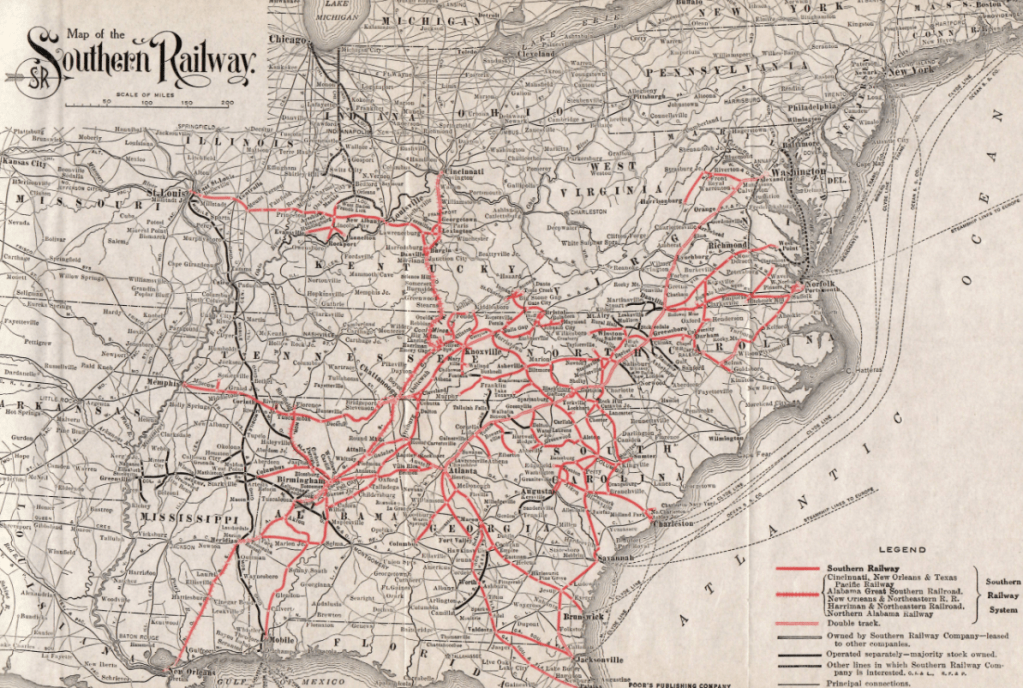
Southern Railway built a new depot in the heart of downtown Johnson City in 1912 and became one of the primary passenger and freight systems in the area, offering more connections than the other stations.2 We don’t know if Maude took one of the Southern Railway trains to reach Baltimore, yet it seems likely. Making the 450-mile trip today by modern car would take most of a day, approximately 7 to 8 hours, not counting bathroom breaks. Traveling by a steam-powered train, with speeds around 40 mph and adding in several station stops along the way, it’s difficult to guess the timeline. A full day? Two days? And knowing 12-year-old Maude was in a paralyzed state, this must have been a grueling experience.
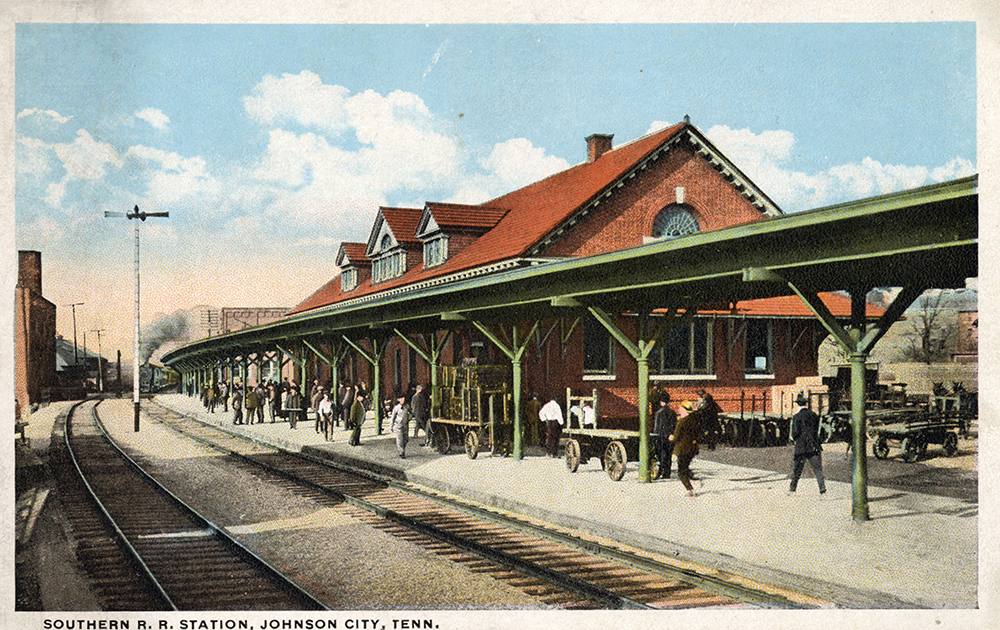
โ€œSouthern Railroad Station,โ€ Archives of Appalachia, accessed July 19, 2025, https://archivesofappalachia.omeka.net/items/show/6688.
Poor’s Publishing Company 1921
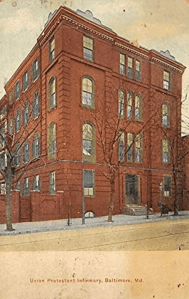
Union Protestant Infirmary, Baltimore MD

Maude was a patient at Johns Hopkins for nine months at the Union Protestant Infirmary, founded in 1854 as a charitable organization to provide medical services at no cost to families. Despite everything this business model suggests, Maude had a solid team of doctors and medical staff at this teaching hospital to give her the educated care she deserved.

But it wasn’t enough. Sadly, little Maude died on the winter evening of Thursday, January 16, 1920 at the age of thirteen years, six months and six days. Her mother Emma later wrote a poem as a memoriam that was published in the Herald and Tribune in Jonesborough Tennessee on July 8, 1920 to narrate Maude’s health journey over those months. A story that reveals Maude’s bright light as she endured a crippling illness, as well as Emma’s tribute to the medical team.


Excerpt from Herald and Tribune, 1869โ€“2025 [database on-line]. Lehi, UT, USA: Ancestry.com Operations, Inc., 2025. Last updated: July 17, 2025

In Memoriam
Maude Payne

One year ago the second of May,
We took little Maude away,
To the Johns-Hopkins hospital, the greatest in the land.
A band of doctors came around,
And with the X-ray the disease was found
Then Dr. Tibits said she would have to lie in bed,
With a weight to her little head,
And the paralytic would soon clear way,
And she could come home some day.
Dr. Bare took her in his care,
To give his students a share;
He would bring them around her bed
And turn and twist her head;
Then he would advise, just to make them wise,
So some day they can win a prize.
As weary months were passing by,
We watched with a wishful eye
For the U.S.A. mail to come flitting by;
Hoping a letter to receive that she was well again,

But it never came.

At last Dr. Nachlas wrote and to my regret,
Little Maude hasnโ€™t improved any yet,
An operation is all that will do,
The paralytic to remove, if to this you consent,
So I boarded the train and to Baltimore I went,
And when the place I reached
Maude looked up with innocent surprise
With her beautiful blue eyes,
she said: โ€œHow is it that you have come again?โ€

And to this I did consent.

Then to the operating room she went
On a Monday morning soon,
And brought back in the late afternoon,
Again suffering many a pain.
Then in Doctor Nachlas came,
And called her honey, kiddy and pet,
And said, you will get well yet,
And we are so glad your mamma came
To help ease the pain.
You are the best girl I ever saw,
And soon you may go home to see your pa.
But Doctor Lee shook his head,
And said, long time you will be in bed.
She laughed with merry glee and said Iโ€™ll hide behind the door,
When I can walk and tease the nurses more.
Then in came Miss Mure
But no disease she could cure.
With sparkling eyes and shining grace
She said soon this little girl the nurses will chase.

At last a telegram came faster than the train through sleet and rain,
And said, Where is L.M.Payne?
Maude is very bad, and Oh! How sad we felt,
For little Maude was many miles away,
And we could not start until nearly day.


The train was late and before her father reached Baltimore,
A band of angels came and took her over
To that beautiful golden shore.
With her eyes closed and her face pale,
Ready to return to clay.
Miss Frantz, so saintly sweet,
Came across the icy street,
The doctor had said Maude is very ill;
And she came a motherโ€™s place to fill.
It was Godโ€™s will to take her away,
At the close of that day.

Written by her Mother.
The Jonesboro Herald and Tribune (Jonesborough Tennessee), Thursday, July 8 1920, page 8


A family friend later shared that as Maude was dying, she said these words to her nurse, “I am going to sleep now, to sleep that long, sweet sleep. Asleep in Jesus, oh how sweet, where none ever wake to weep.”3 Maude recalled these words from a Christian hymnal “Asleep in Jesus! Blessed Sleep.”4

Ada Maude Payne is my great-aunt as these things go. My maternal grandfather’s little sister. My grandfather, Fred Payne, was only 15 years old when Maude died. Family lore has it that Ruth Jane’s early death by tuberculosis held an impact to the family, but Maude’s passing was the impetus to generational trauma. My mom tells us that our grandfather Fred was vigilant in inspecting every tuberculosis test on his four children to ensure they would not suffer from the past.

So what was little Maude’s cause of death? Emma’s memorial poem suggests many of the health concerns of the early 21st Century, from the Great War’s Spanish Influenza to Polio to Tuberculosis. But really, none of those hit the mark for a diagnosis.

Because Maude’s death was in Baltimore, I contacted the Maryland archives for any records available. We successfully discovered her death certificate showing her cause of death to be Tuberculosis of the Spine, also known at Pott’s Disease.
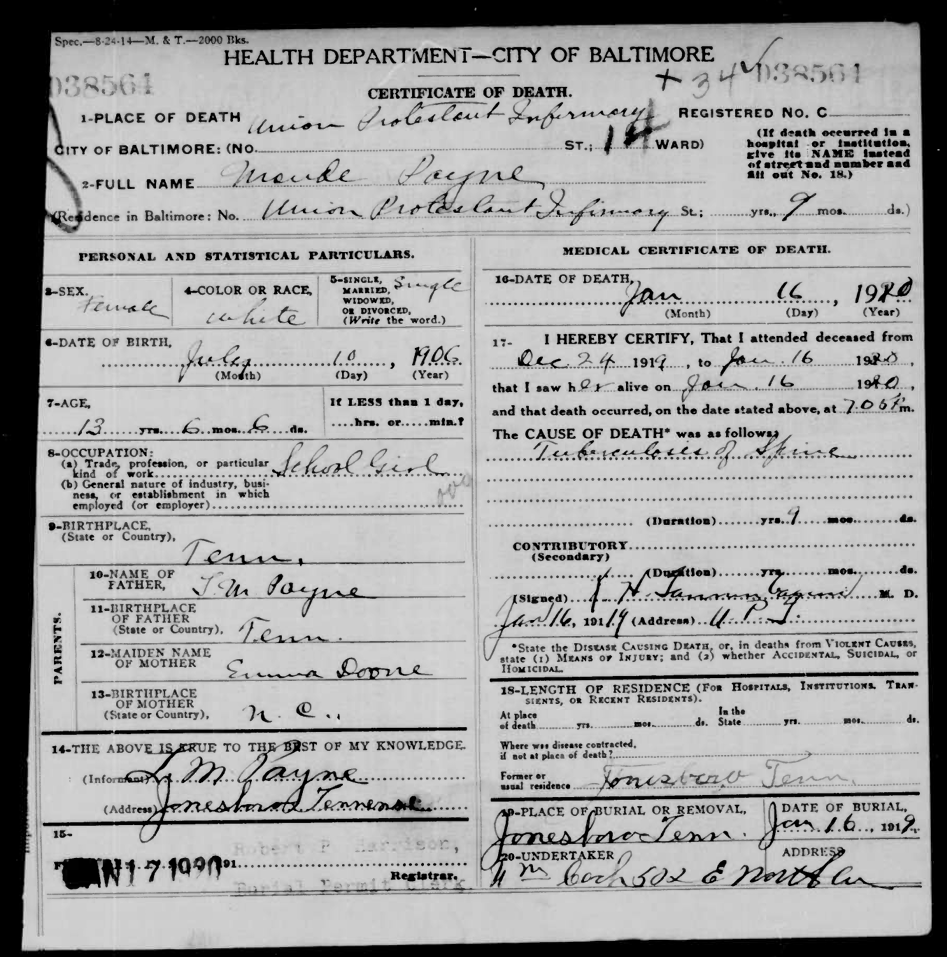
Tuberculosis (TB) is a rather familiar disease. It exists still today, but tends to be considered an “old-timey” affliction. We’ve all heard the historical stories about consumption and infirmaries designed to quarantine patients. But Tuberculosis of the Spine was different. A diagnosis was grim in the early twentieth century, associated with a high morbidity rate and the double hit of neurological deficit and spinal deformity as the worst complications. 5 Prior to today’s anti-tuberculosis therapy, there was no consensus on the management of TB spine and depending on the practitioner it was managed either conservatively or with surgical debridement.6 Surgery would be performed to remove abscesses, but little could be done to treat the disease as it progressed.

We find some of those clues in Emma’s memorial poem. An x-ray to confirm diagnosis, weights as an attempt to correct the spinal deformity, an optimistic surgery, followed by a rapid decline, possibly accompanied by sepsis. Her health deteriorated so quickly that Maude’s father sadly wasn’t able to arrive in time after receiving the telegram.
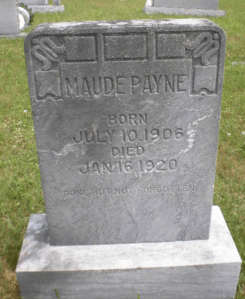
“Gone but not forgotten”

Maude’s remains were returned to Tennessee where she was interred at Pleasant Valley Cemetery in Washington County.

Because our little blue-eyed Maude left to run free on “that beautiful golden shore” so young, she has no descendants to pass along her story. And everyone who knew her is, of course, gone now as well.

I feel it’s important to share the story of our relatives that would otherwise simply be a dash of Date of Birth-Date of Death in our family tree. And I’m glad we can do this for Maude.


  1. The Payne Family Record, Mary Nell Payne Lee, 1972 โ†ฉ๏ธŽ
  2. Archives of Appalachia, accessed July 19, 2025,ย https://archivesofappalachia.omeka.net โ†ฉ๏ธŽ
  3. Maude Payne story of her hospitalization at Johns Hopkins and death.
    Article from Feb 12, 1920 Herald and Tribune (Jonesborough, Tennessee) Stories and events, Human interest โ†ฉ๏ธŽ
  4. https://christianmusicandhymns.com/2022/09/asleep-in-jesus-blessed-sleep.html โ†ฉ๏ธŽ
  5. Jain AK. Tuberculosis of the spine: a fresh look at an old disease. J Bone Joint Surg Br. 2010 Jul;92(7):905-13. doi: 10.1302/0301-620X.92B7.24668. PMID: 20595106. โ†ฉ๏ธŽ
  6. https://link.springer.com/chapter/10.1007/978-981-16-9495-0_2 โ†ฉ๏ธŽ

Eva and the deer keeper’s lodge: Part One

Who has two clues and loves a mystery? This girl. I’ve got a two-parter for this family story, in which we’ll look into the 200 year-old question: was Eva Wampler Kinsey buried in an unmarked family plot on the grounds at the Dayton National Cemetery — a half century before the first civil war soldier was buried there? Family stories passed down tell us that in 1804 Eva and her husband Henry Kinsey purchased the land that now is home to the Veterans Administration Medical Center (VAMC). And that they both died on that land and remain there to this day. But no one knows exactly where.

Let’s start this investigative journey by visiting the grounds of the VAMC in contemporaneous times. And by use of that six syllable word, I mean last week.

There are those of us who find a thrill when we discover a hidden gem within our community. In our own southwestern Ohioan city of Dayton we can offer such treasures as the Oregon District, the Five Rivers Metro Parks, and of course our own version of modern mythology in the Dayton Dragons minor league baseball.

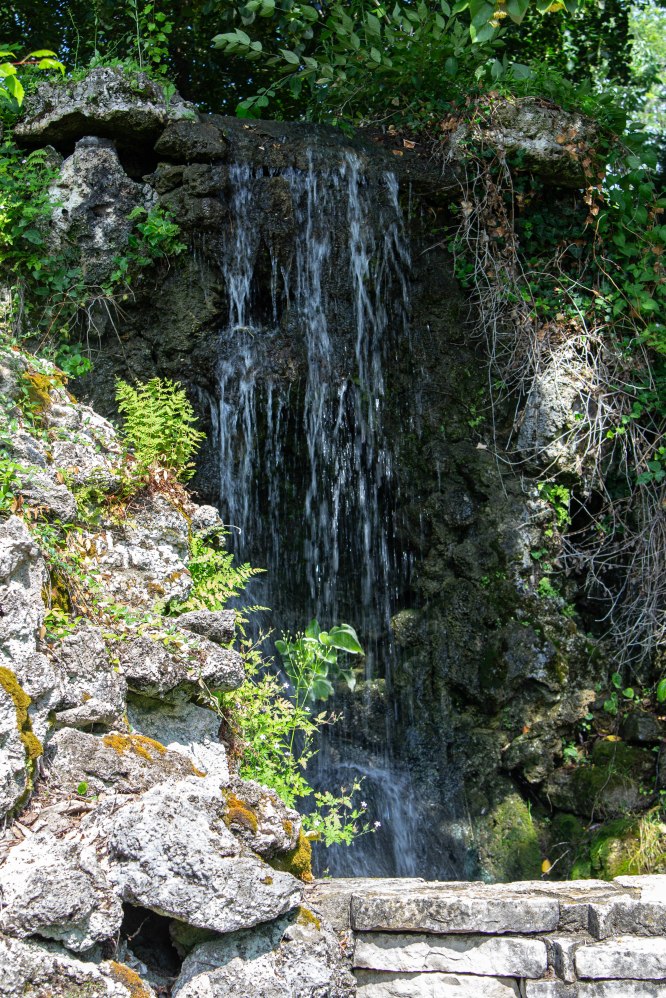
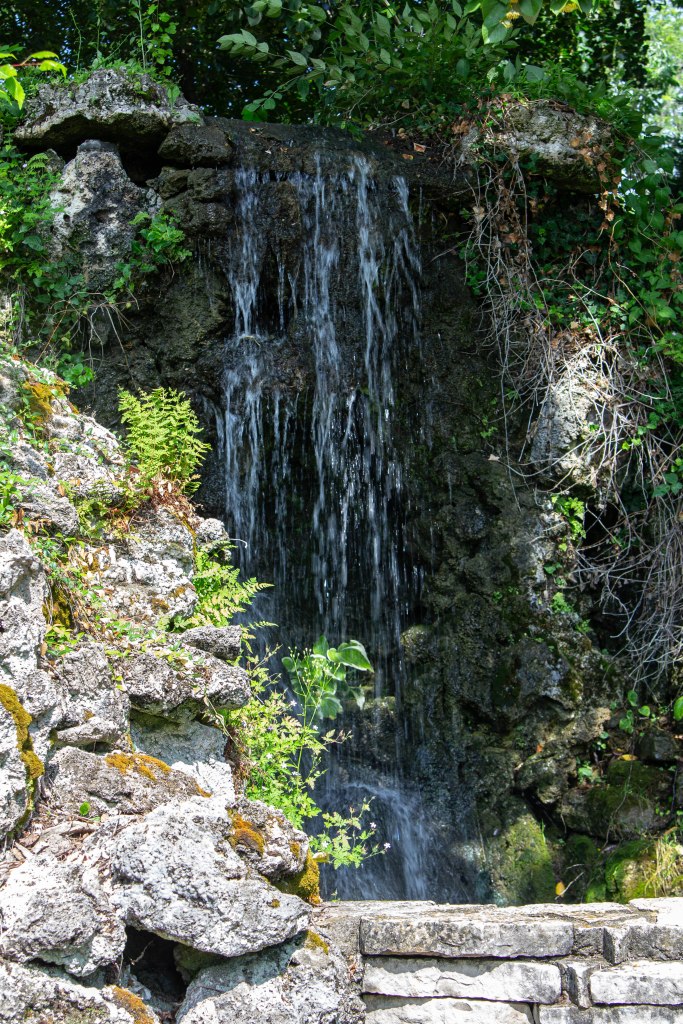
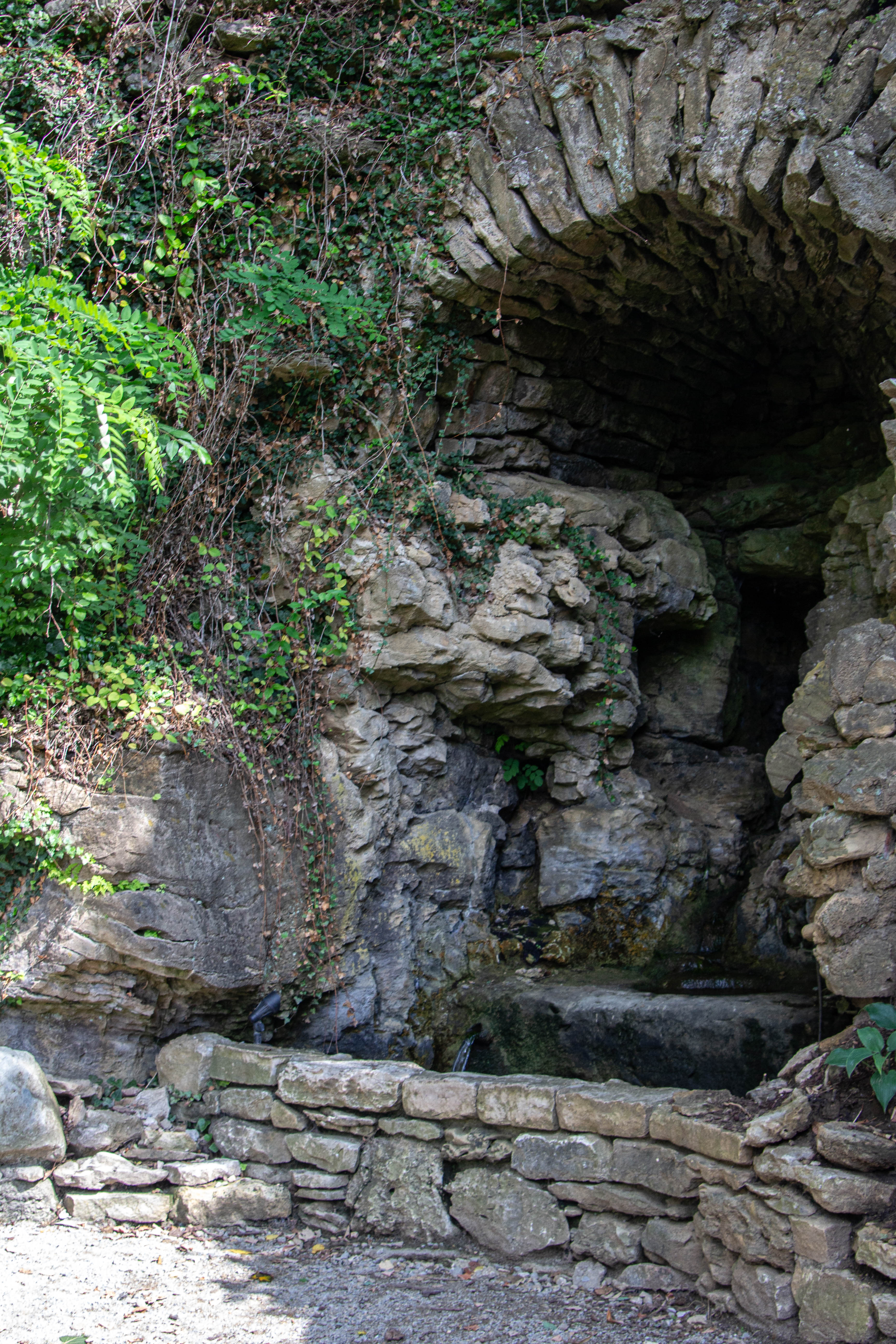
One of the two natural springs in the Grotto Gardens

All are impressive in their own right, but were you aware that there was a prestigious post-Civil War treasure located near the grounds of Dayton’s National Cemetery? Once lost for generations, the Grotto Gardens are alive again thanks to a team of volunteers dedicated to bring back this historical splendor.

In 1867 the City of Dayton donated $20,000 towards the purchase of 380 acres of farmland located just west of the city. It was on this land that one of the first National Homes for Disabled Volunteer Soldiers was built for the veterans of the the Civil War to receive healthcare.

Of these 380 acres, nearly a third was dedicated to a new national cemetery for veterans and the remaining campus was designed in a grid pattern creating small neighborhoods among the administrative buildings. But among these straight lines there were walking paths that curved around gardens and parks. These natural spaces, designed by architect C.B. Davis, were intended to provide a peaceful environment for the men who had experienced the horrors that come from warfare. A remarkable consideration of mental health in a time when such things were, at best, misunderstood.

A natural spring font carved into a grotto by Civil War veterans

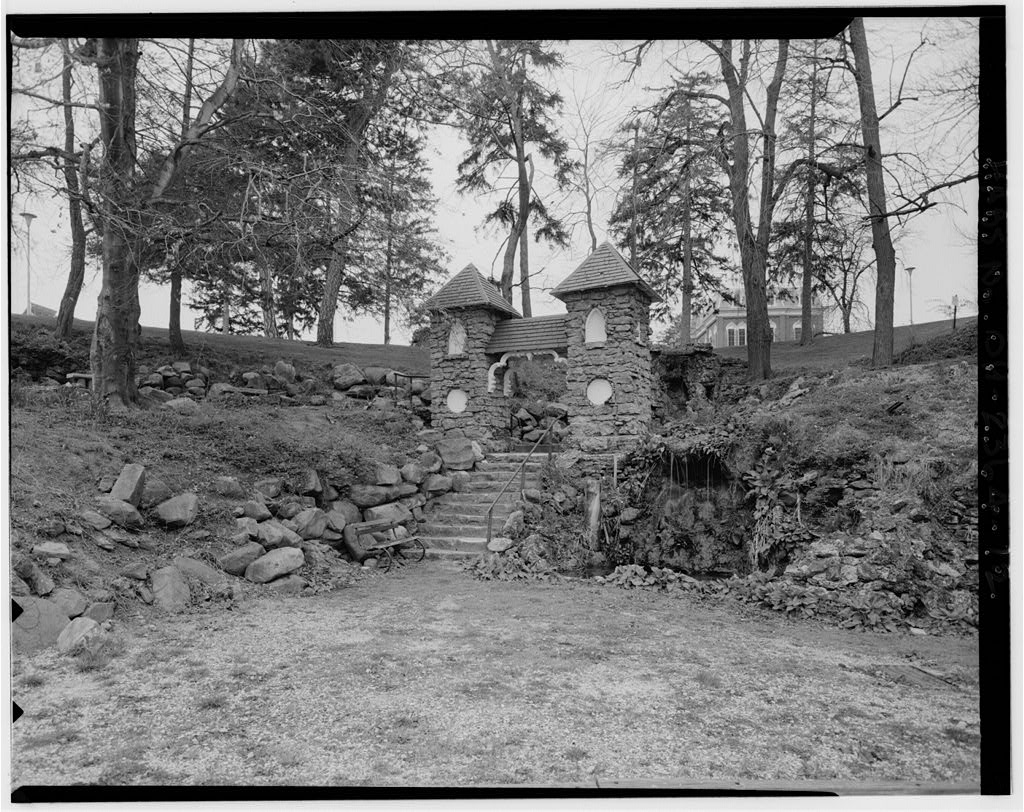
Inspired by Davis’ landscaping design, in 1868 resident veteran Frank Mundt began planting vines and other foliage at the site of a former limestone quarry at the edge of the property. This project quickly grew to include the efforts of other residents who carved stone stairways, natural spring grottos, and the Grotto Archway that was built from limestone from the quarry. By 1871 a conservatory and greenhouse containing exotic plants were built. Also nearby was a 20 acre park that held an aviary with a pair of “American Eagles.” A herd of deer had been imported from Look Out Mountain (possibly Tennessee) and were as tame as sheep, willing to be hand-fed treats, according to a report printed in the Belmont Chronicle. The final result of these collective efforts was a day-trip destination that was enjoyed by many Ohioans of the post-Civil War era. Actually, it’s said that by the mid-1870’s approximately 100,000 people were visiting the hospital grounds and its Grotto Gardens annually.

The Dayton Herald
Dayton, Ohioย โ€ขย Fri, Jun 6, 1884

Yeah so, it was kind of a big deal for a while. And then it was all gone. Structures decayed, walking paths destroyed by weather, and the garden overtaken by invasive plants.

One of the carved grottos. Note the keystone-style top, a bit of engineering marvel that remains strong after 150 years.

So what happened? Nothing dramatic, but instead it was pretty much the usual that happens with these things. Governmental budget cuts and readjusted priorities of those in charge who didn’t consider a historical garden space worth the money to maintain.

Seasons passed one after another, more Daytonians were sent to fight wars, and our fair city of Dayton moved through the second industrial revolution, became the birthplace of manned flight, broke the code to some Enigma machine, then onto the space age and beyond.

Until we reach 2012, when a local non-profit, the American Veterans Heritage Center, partners with Dayton’s Veterans Administration Medical Center to initiate plans to repair and restore the Grotto Gardens.

And beautiful things begin to happen. Again.

As we walked through the grounds a decade after the rebirth of the Grotto Gardens, we stopped to talk with the volunteer Master Gardeners who keep the beauty going. One tells us how it took two years of experimentation to find what would grow best in her moss-lined garden bed that never sees sunshine. Another talks about the trees, some old and others newly planted, including the massive banana tree that gets trimmed back in the winter to grow again in the spring. It was apparent they love what they do and care about the future of the Grotto Garden. Many of the individual gardens are named after someone influential, except none of the names are the Master Gardeners. And that’s were altruism and volunteerism meet, y’all.

Standing at the stone grottos built by the veterans so many generations ago, we experience the calm of the natural springs running between the cracks in the stone. We imagine how the purity of this water inspired belief in its healing properties and hope that it did indeed bring relief to those who needed it.

It’s true our modern Grotto Garden takes up less space than it did when it was first created in 1868. Still, we feel the essence of its draw and understand how this natural space brought so many visitors, whether by streetcar or horse-drawn carriage. It’s this history that is the foundation of what we see today.

Since the completion of the original work in 2013, the Grotto has become a valuable healing tool for the veterans and families. The VAMC and AVHC have continued their collaboration through the MCMGV, which provides for ongoing maintenance and restoration of the gardens. With Section 106 as an important backdrop, the Grotto restoration exemplifies the benefits of a federal agency developing and fostering partnerships with non-profit organizations, volunteers, the SHPO, and outside professionals for the preservation and treatment of historic properties. The result was an outstanding historic preservation project that continues to advance the VAโ€™s mission of healing wounded warriors.

ADVISORY COUNCIL ON HISTORIC PRESERVATION
https://www.achp.gov/sites/default/files/2017-01/dayton-grotto.pdf

It’s near the Grotto Gardens where we will look into our Eva Wampler Kinsey mystery. Those 380 acres of farmland that was purchased in 1867 for the veteran’s medical center? That was where Eva and Henry Kinsey built their log cabin in 1804. They lived on that land until their deaths in 1920 & 1922, respectively.

Family lore is that Eva and Henry are buried in unmarked graves “on a knoll near the deer keeper’s lodge.” It’s also suggested that their daughter Hannah, along with her husband Jacob Wolf, are buried in this family plot, which is referred to as the Kinsey-Wolf Cemetery.

As it goes with family lore, it begins with a foundation of truth.

We’ll take a deep dive into this mystery in Eva and the deer keeper’s lodge: Part Two.

A view of the stone archway (center) and one of the grottos (center right)

Photo gallery:

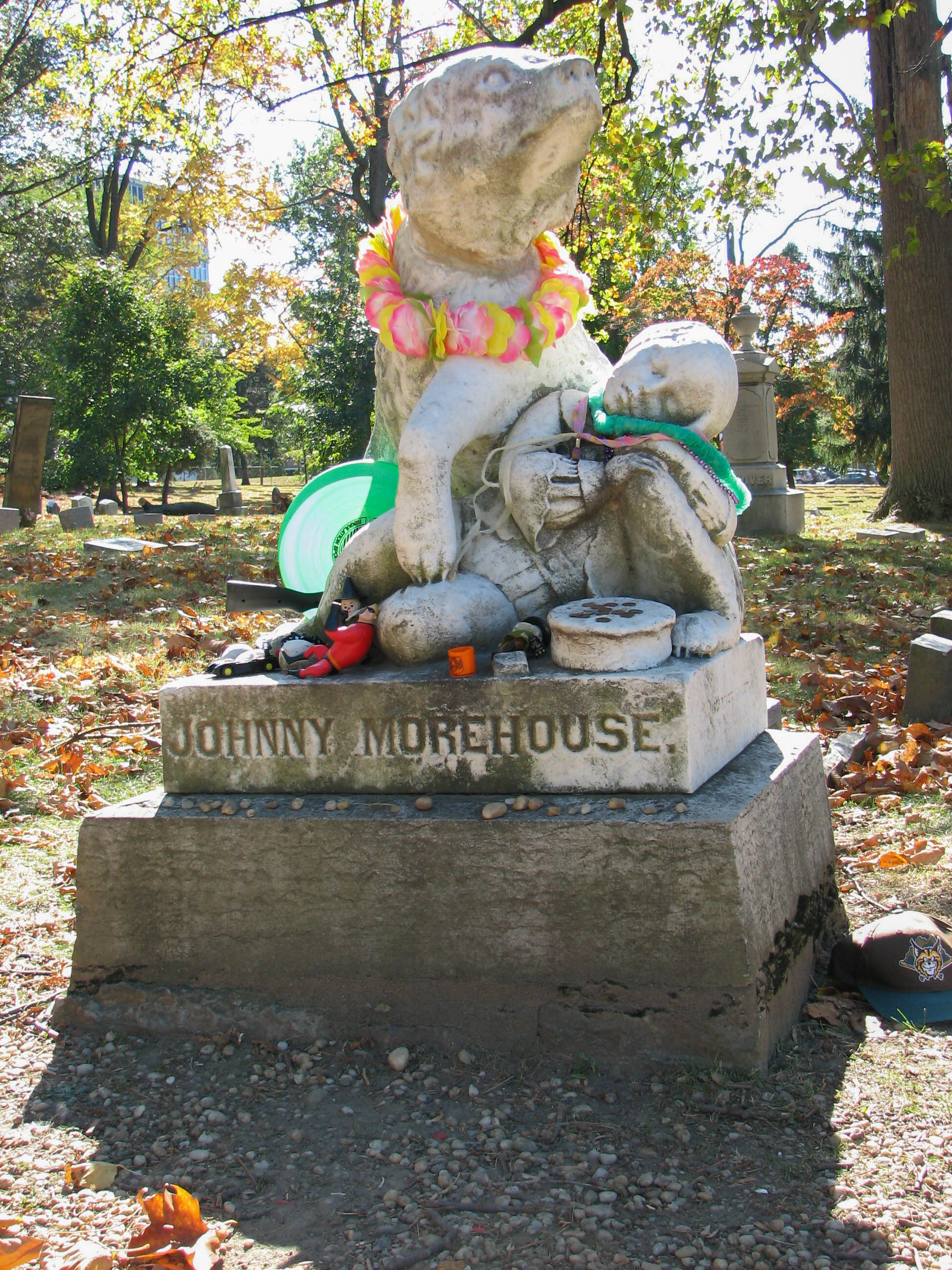
Johnny and his dog

This bit of Dayton history is a reblog from a post on our sister site, Raising a Super Dog, that I published a while back. And by a while back, it’s possible I may mean about ten years ago or so.

I’ll publish the story as it happened back then, complete with photos. At the end of the article, I’ve added new information that I’ve uncovered since the original post went live in 2010.


Imagine this. You’re exploring an old city cemetery during the early evening hours. You like this time of day because of the softly muted light. You’re taking photos of an interesting monument and thinking intellectually deep thoughts about macro shots, f-stops and ISO settings.

You’re in the zone. If you lean at this angle, is the depth of field too shallow or should you maybe bump it up to . . . and suddenly from behind you comes a deep bass “EXCUSE ME.”

What do you do? Turn around smoothly with an air of cool authority that says clearly, you wouldn’t DARE accost me? Or instead make a weird little strangling sob sound that is shorthand for “my purse is on the front seat of the car”?

What did I do? Oh, as if. Option B, naturally. Just about dropped my stupid camera, I did. To my relief, the interruption to my artsy musings was merely a young college student from the adjacent University of Dayton who was taking his evening constitutional through Woodland Cemetery. Although I did make clear that I HAVE MY DOG IN THE CAR.  Perhaps a little too loudly. Thinking this may thwart any untoward thoughts against my chubby, middle-aged person.

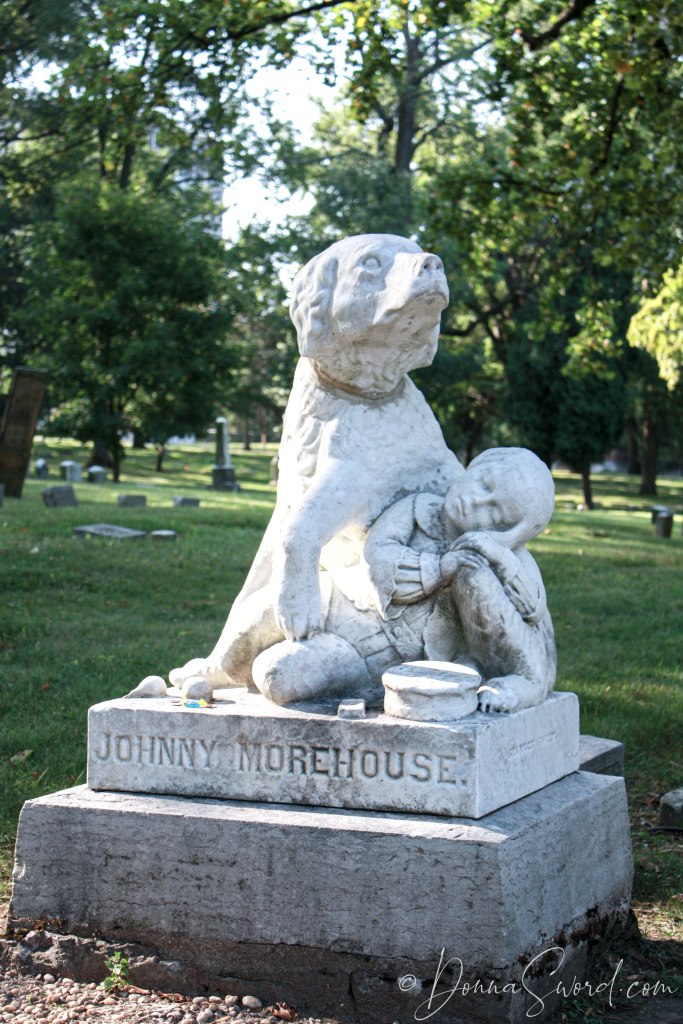
The young man was merely curious; he’d heard stories about a haunting at Woodland. Something about a boy and his dog. He couldn’t help but notice that I was taking photos of a monument of the same. Taking photos is right. I was trying to get a macro shot of the stone dog’s nostrils (f-stop, depth of field…) when he caused me to jump out of my skin. But more on dog nostrils in a minute.

Hey fella, she left the keys in the ignition.

So, what’s the story on the boy and his dog; did I know? Are you kidding me?  Heck yes, I know.  Just give me a sec here to swallow first so I can get my heart dislodged from my tonsils, though.

In waning summer of 1860, 5-year-old Johnny Morehouse was playing with his dog near his father’s cobbler shop in downtown Dayton, Ohio. Dayton was still enjoying her youth during these pre-Civil War times and relied on the nearby river, along with the Miami & Erie Canal system, for commerce with other Ohio cities. This was long before the Great Flood of 1913 when folk still had a tentative trust in the Great Miami River and its tributaries. 

Johnny ignored his mother’s warnings and was playing at the edge of the canal, tossing a ball into the water for his dog to retrieve. When he put all his weight into a hard throw, Johnny lost his balance and fell into the dark water. When Johnny didn’t come back up, his dog jumped in to pull his boy back to safety.

But it was not to be.

Little Johnny Morehouse drowned on that warm summer day of August 14, 1860.

Johnny was laid to rest later that week in beautiful Woodland Cemetery, which was also in its youth, having been established less than twenty years prior. Legend has it that his dog stayed at his graveside, refusing to leave. For a time, kind families would come by to bring food and water to the dog.

Then one day, the dog was gone and never seen again.

It’s said that in late summer, at the last light of the day after the cemetery gates have been locked, you can hear a boy in the distance, laughing and playing with his happily barking dog.

But really, people

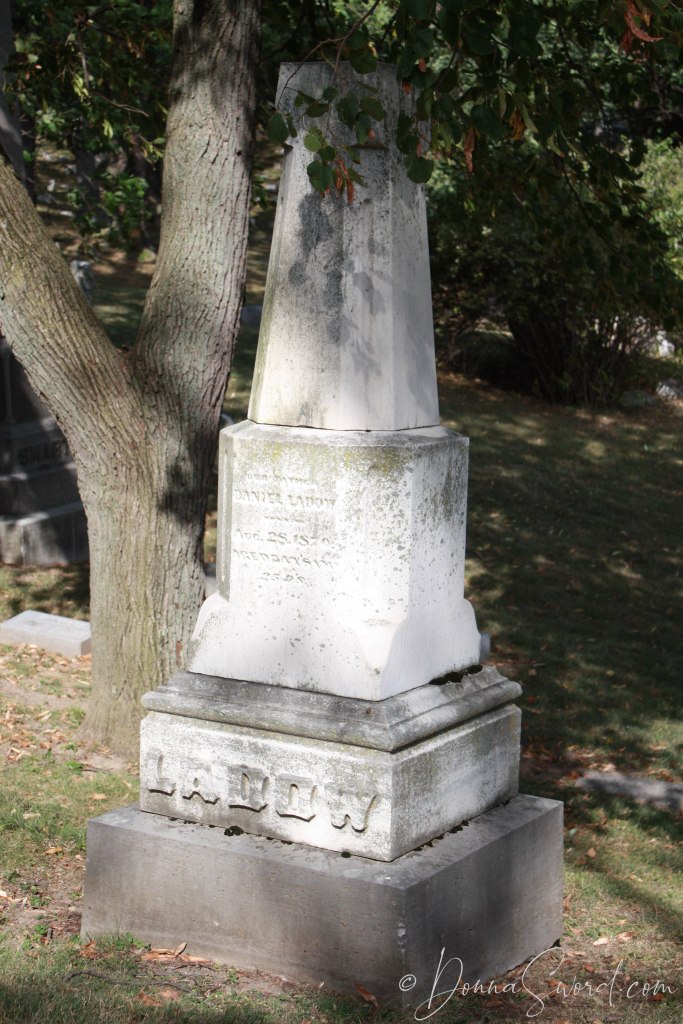
Johnny’s father, John, was a cobbler, making shoes and boots for his Dayton neighbors. Making an honest living, but certainly not a rich man by anyone’s standards. The family could only afford a modest grave marker for their youngest son. But a local businessman, Daniel La Dow, was inspired by the story of Johnny’s valorous dog. La Dow himself was a skilled stonecutter and owner of a prosperous marble works in the city. His team designed and created the remarkable monument that is at Johnny’s gravesite. ‘Tis truly a work of art that is not duplicated anywhere else within our fair city.

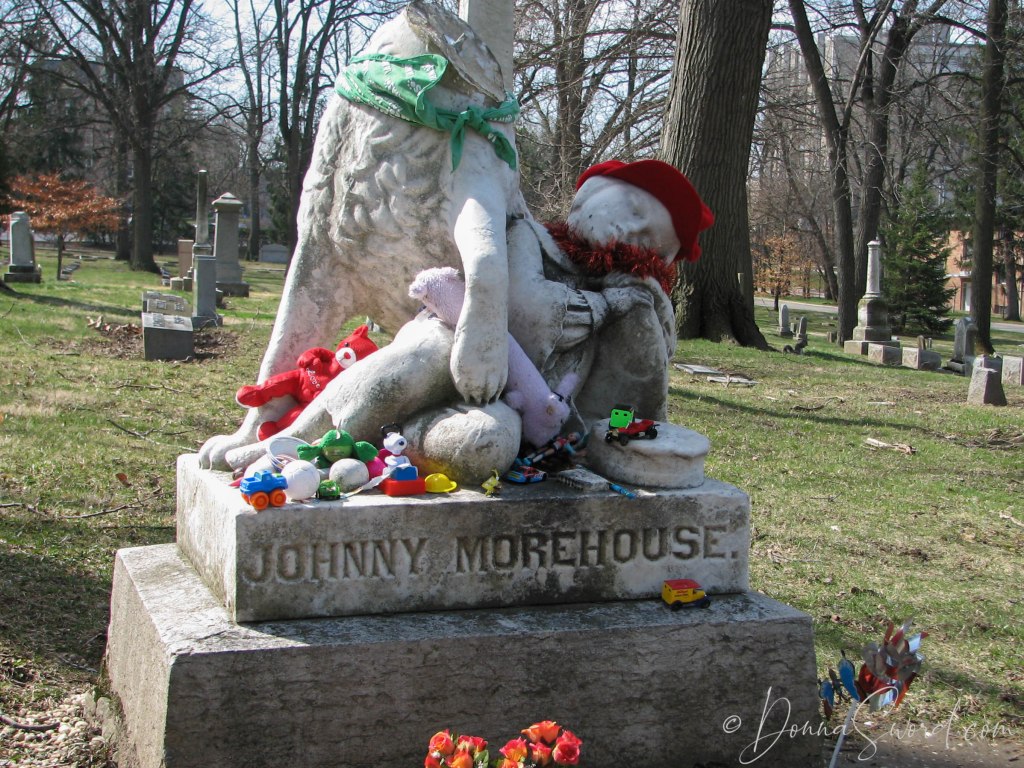
The monument has no dates on it – no date of birth nor death. The only inscriptions are Johnny’s name and the words Slumber Sweet. We see that after these past 150 years, the dog remains vigilant with a protective paw over the young boy as he sleeps. Forever to be alert and watchful in stone.

At their feet rests Johnny’s cap and the toys found in his pocket that horrible day; his ball, a top, and mouth harp (harmonica).

Woodland Cemetery states this is their most visited gravesite – and the most decorated. The site changes daily as families come by to pay their respects to this lost boy by leaving toys, trinkets and clothing. These items are later collected and donated to charitable organizations.

Now, about those nostrils

To avoid cracks in the stone due to temperature changes, La Dow included an air vent inside the monument. This rather clever design allows barometric pressure changes to be released through the dog’s nose. It is true that if you hold your hand near the dog’s nostrils, you can feel it “breathe.”  In the coldest of temps you can see steam coming from the nose.

What’s really surprising to me though, is that in spite of the various legends of this boy and his dog (I’ve only shared one story), we don’t know the dog’s name. This is lost to history as well as the dog’s breed. I don’t know, it seems disrespectful to me to even nickname this boy’s dog. But what kind of dog is it?

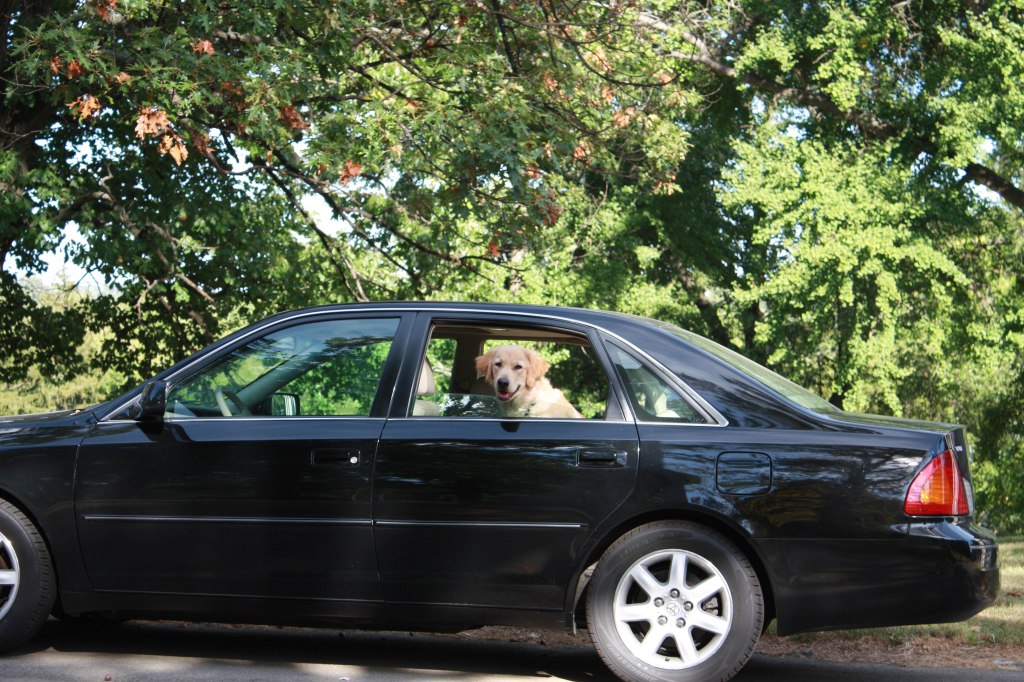
Take a break, Hero Dog. I got this.

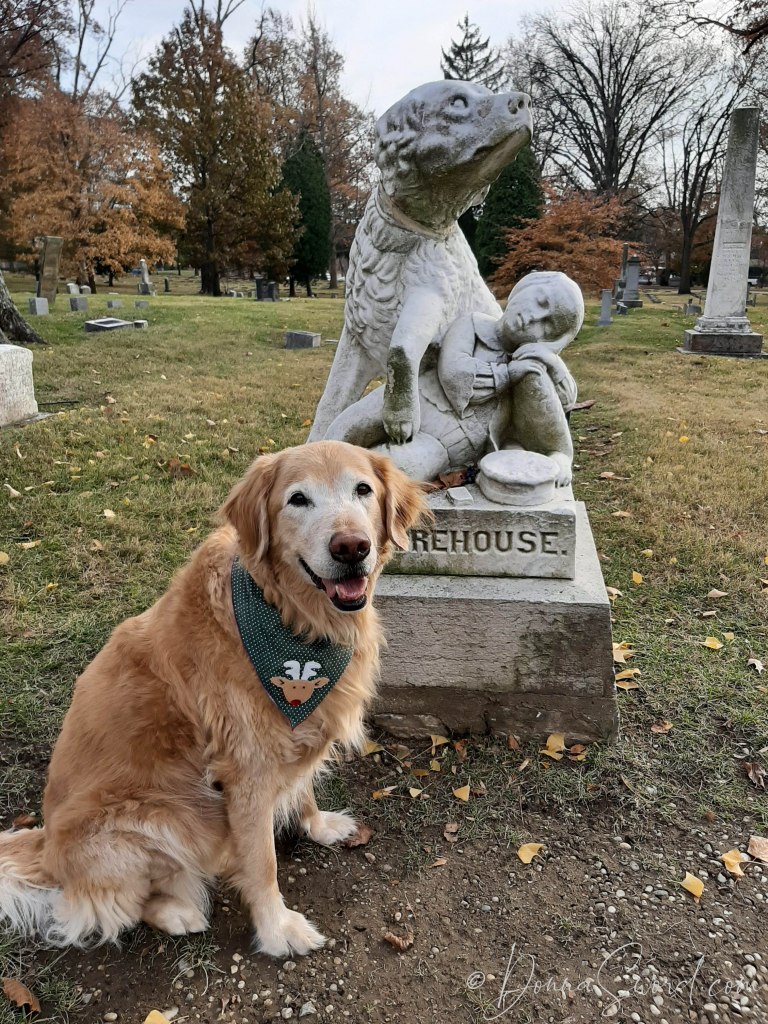
But isn’t it obvious? Love, responsibility and a never-ending devotion? It’s got to be a golden retriever, don’t you think?


Ok, so what is it that I’ve learned about the legend of Johnny Morehouse and his dog over the last ten years?

Johnny’s father, John Morehouse, was born in 1828 in Newark, New Jersey. John later came to Dayton with his parents, John and Nancy, where he helped his father re-establish their family’s craft of boot and shoemaking. Eventually the two set up a wholesale shop on Third Street in Dayton’s “Miami City” neighborhood, not far from where the Wright Brothers’ would soon start their printing business (and later their famous bicycle shop). The Miami City blocks were located west of downtown Dayton, separated from the city by the Great Miami River.

John Morehouse married Mary Browning in 1851, when John was only twenty three years old. Four years later Mary gave John a son, a namesake who they called Johnny. They might have imagined Johnny to be a third generation shoemaker, but first there was a childhood to be had.

In the days before municipal playgrounds and little league teams, the river banks served as the Victorian Era child’s amusement park. And the Great Miami River was a mere three blocks from both John’s wholesale Boot & Shoe business on West Third Street and the Morehouse home located on Williams Street.

The Miami-Erie canal was across the Third Street bridge, far into the downtown milling and manufacturing areas. It was unlikely that five-year-old Johnny was near the canal on August 14, but he was certainly not a stranger to the Great Miami River or the adjoining Wolf Creek that meets the river just before the bridge.

Although prone to flooding during the spring, the Great Miami’s waters would be down during the hot, dry days of late summer. We can imagine a cobbler’s young son neatly placing his shoes under his bed, then stuffing his pockets with beloved toys before running down to the river’s edge. With the August sun on his shoulders, it would be hard to deny the temptation to walk barefoot into the lapping water; to cool his toes in the silty mud. His dog, a water lover himself, is splashing along at his side, entertaining the thoughts of playing fetch with his favorite boy.

John continued his boot and shoemaking business after Johnny’s death. Then after Mary passed, John remarried the widow Barbara Shook and they relocated their home to the other side of the Great Miami to live on Baxter Street. Barbara died at the age of 51 in 1878, leaving John twice widowed.

Later in life John closed his shoemaking business for good and made a living as an insurance salesman. John died on August 7, 1903, almost 43 years to the day after Johnny’s early death. He’s buried in the Morehouse family plot at Woodland, with the Boy and Dog within sight.

www.donnasword.com

Daniel La Dow, the designer behind the Boy and Dog, owned La Dow & Hamilton Marbleworks (later La Dow & Winder) located downtown on Third Street, between Jefferson and St. Clair Streets. He is buried at Woodland Cemetery as well. His monument is an impressive obelisk to honor the life of this generous man. I wonder if he designed this himself and feel that he very likely did.

Another bit of history with the Boy & Dog monument happened in April, 2008, when the head of the dog was displaced from its perch. I was visiting the cemetery and was dismayed to see this demarcation of our city’s beloved monument. While taking a photo, a Woodland security guard drove past and yelled something from his car.

“What?” I said.

“We got the head!” he repeated.

Ok, good to know. I was worried. The damage wasn’t vandalism as first rumored, but something more in the line of natural causes. One story blamed a falling tree branch, while another suggested it wasn’t unusual to expect some wear and tear over the hundred plus years of Ohio weather patterns. Restoration was done promptly by Woodland and all is as it should be today.

Do you have your own stories with the Boy & Dog monument at Woodland? What legends have you heard about Johnny and his dog? Share your experiences in the comments!

Sure, it’s been ten years. But I can still fit into the same collar. You should know that.

Clara and the Language of Stamps

Clara was missing her friend, Elizabeth, who might as well have been a thousand miles away. Though Elizabeth was living in nearby Piqua, a stretch of about thirty miles from Dayton, the trip by Western Ohio’s interurban trolley would be an all day affair in 1907. Besides there were so many chores at hand and Mama expected her to keep a watchful eye on Beatrice, Eddie, and Mary. The life of a fifteen-year old girl in Dayton’s Victorian Era was not where one could afford a frivolous day trip.

But the two found another way to stay in touch.

With the price of a penny postage stamp, postcards were becoming the new trend of communication in 1907 and collecting these colorful cards was a favorite hobby for many young girls.

From Smithsonian Institute Archives

On February 27, 1861, the US Congress passed an act that allowed privately printed cards, weighing one ounce or under, to be sent in the mail. That same year John P. Charlton (other places seen as Carlton) copyrighted the first postcard in America.

https://siarchives.si.edu/history/featured-topics/postcard/postcard-history

The first commercially printed postcards were introduced in 1893 at the Chicago World’s Fair, issued as souvenirs of the historical event. In 1901, the United States Postmaster General granted private printers the right to use the term “Post Card” instead of “Private Mailing Card” on their stock. Until 1907, the back of the postcard was for the mailing address only. There was no space for a written message.

On October 1, 1907, printers were permitted to change the design of postcards to a “divided back.” Now a vertical line is added so the mailing address is on the right and a personal message can be written on the left. This seemingly simple change brought the postcard into the Golden Age of Postcards (1907-1915).

From the New York State Library

The decade between 1905-1915 โ€“ the Golden Age of Postcards โ€“ saw postcard collecting reach a zenith of staggering proportion. Literally millions of postcards were printed, imported, sold and mailed. Official U.S. Post Office figures for the year ending June 30, 1908 revealed that approximately seven hundred million postcards had been mailed in this country. By 1913 the total number mailed had increased to over nine hundred million, and, by this date, the craze was reportedly on the decline!

http://www.nysl.nysed.gov/msscfa/qc16510ess.htm

In the days long before heart-eyed emoticons represented how you felt, another trend found a renewal along with the colorful postcards in these early days of the twentieth century.

The not-so-secret Language of Stamps had already been a thing with young lovers sending letters as a matter of courtship. This is one interpretation, which makes me wonder if it differed by region and if the occasional misunderstanding took place.

The Buffalo Enquirer, Sep 15 1906, Page 2

Courtship by correspondence sounds rather romantic and innocent, doesn’t it? Like those notes you’d be passed during Social Studies in middle school written with “Do you like me?” and had two check boxes for “Yes” or “No.” Kinda sweet and awkward.

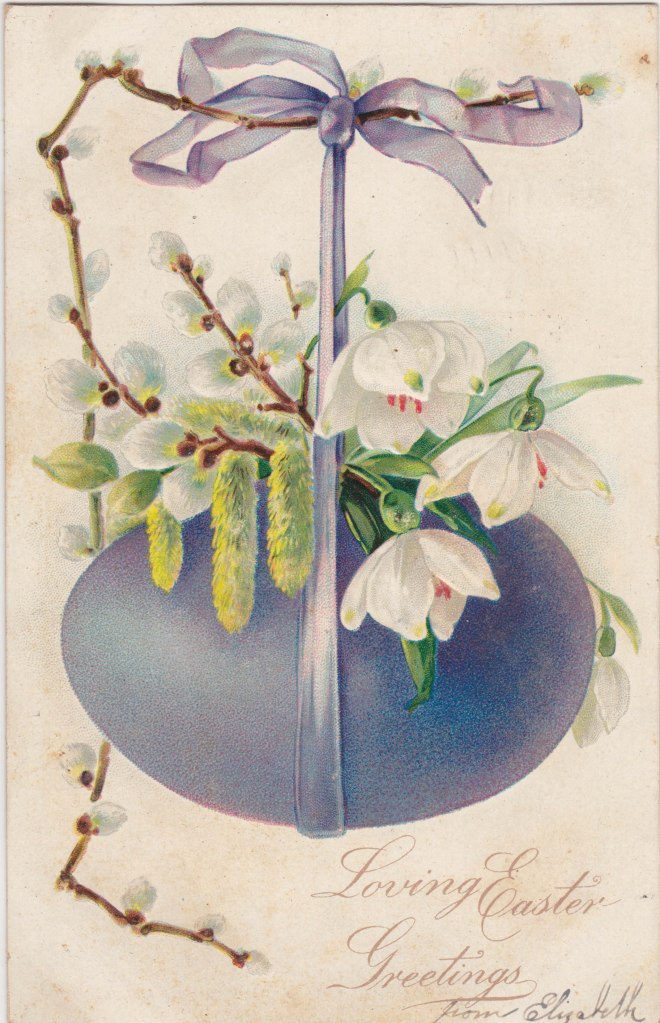
“With all good wishes and sweetest kisses from Elizabeth.” Postcard postmarked April 10, 1909, Piqua, Ohio.

As good friends, I suspect Elizabeth’s stamp language to Clara (see image above) was more of a “Hey, girl! Miss you!” than following any other postage protocol of the time.

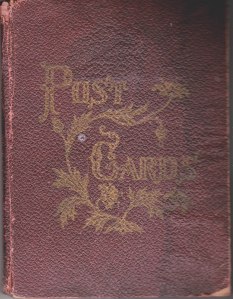
Clara’s Post Cards Book holds 61 postcards from friends and family.

Clara’s postcard collection ranges from early 1907 (her mother died unexpectedly later that year) to 1909. By 1911, she was married to George Washington Sword, a industrious young man who’d arrived from his Maryland farm to start a new life. But that’s a story that needs its own page.

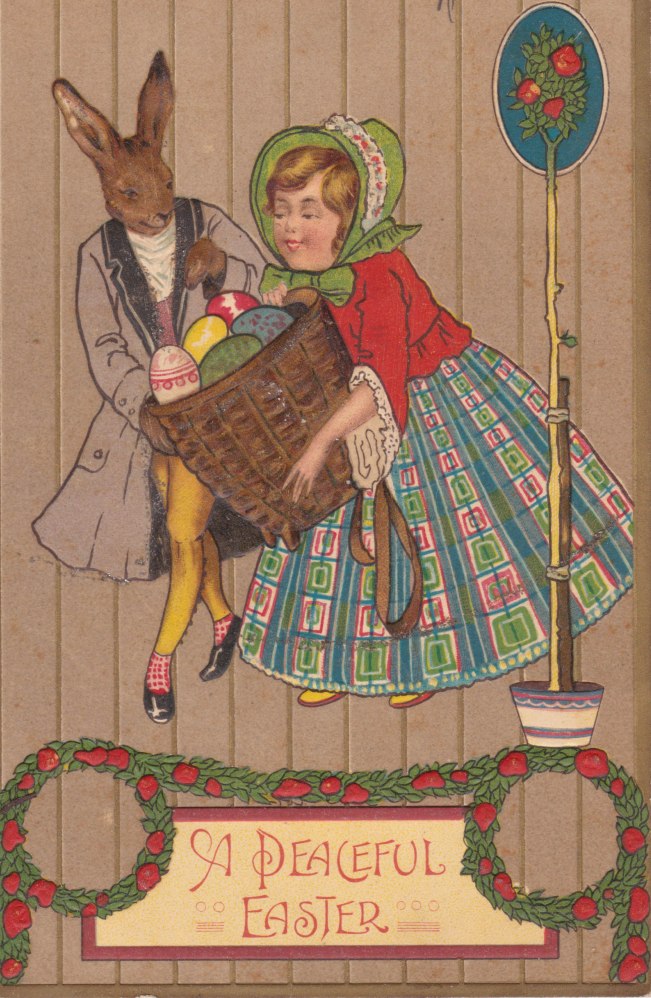
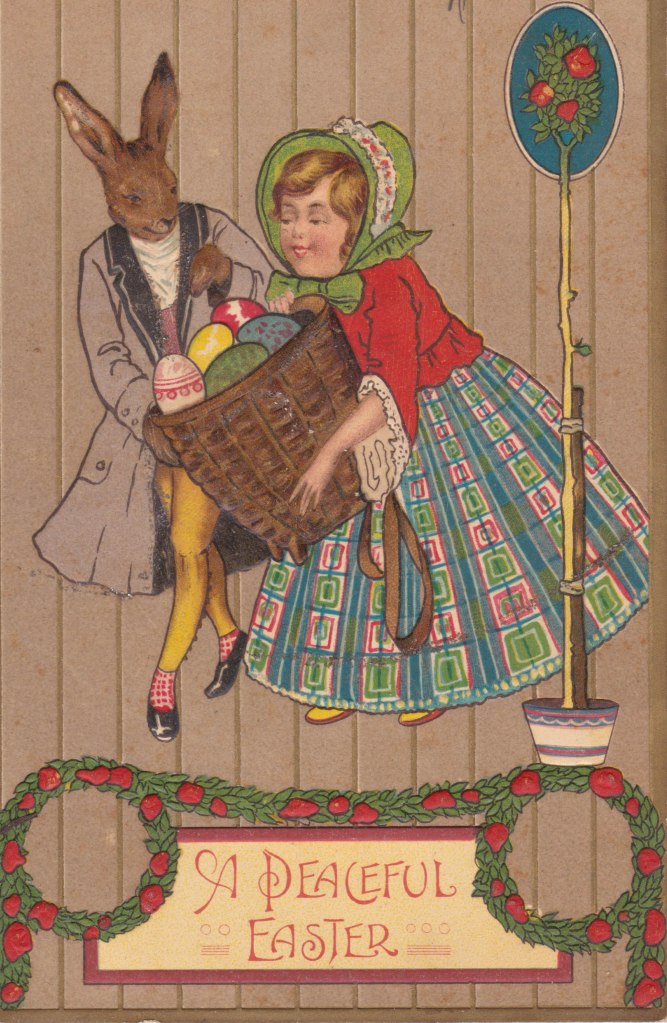
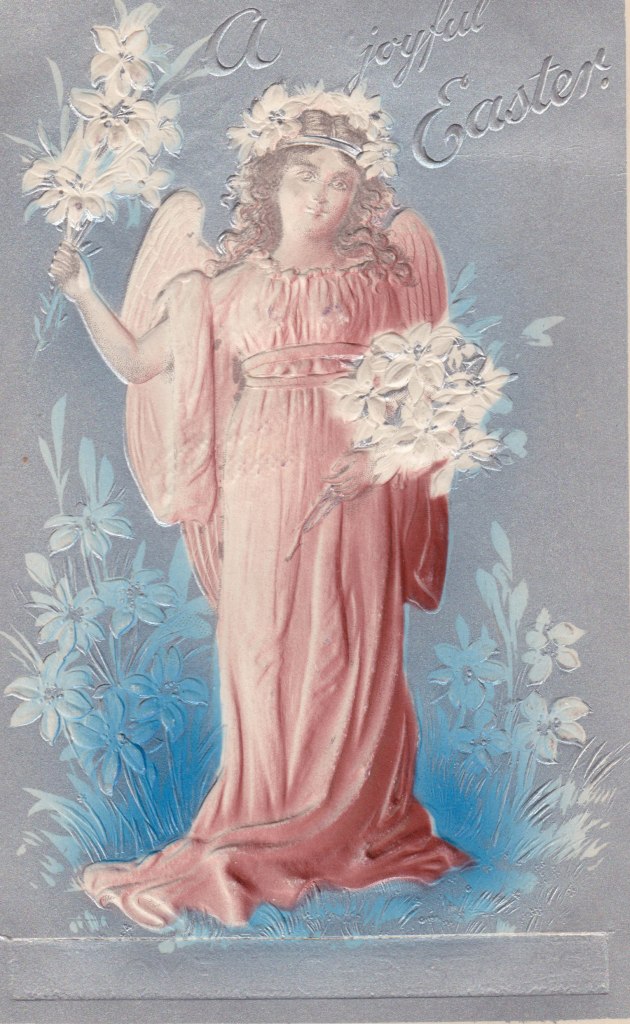
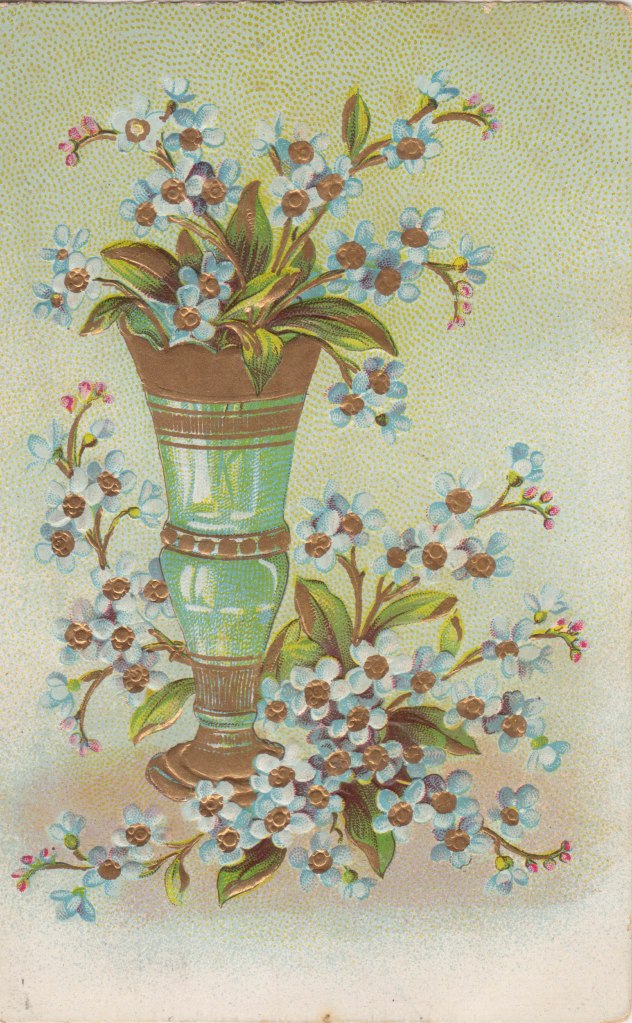
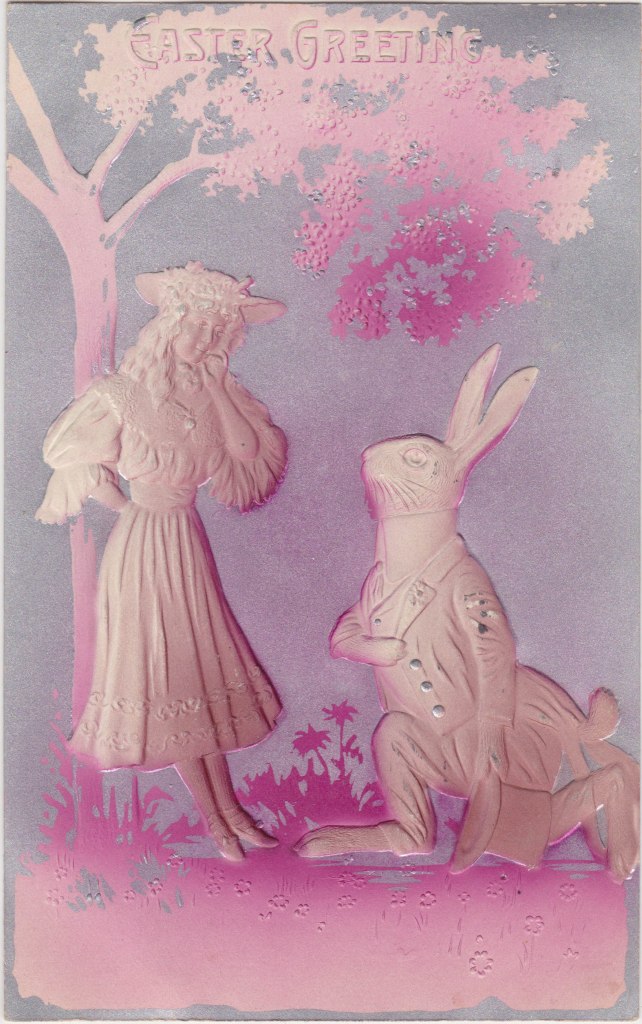
In honor of today’s holiday, I want to share with you the Easter cards that Clara kept in her collection. A brief look at the designs of the time period of 1907-1909 and what appeals to a Catholic teenager of that era. I hope you enjoy this gallery of flowers, chicks, and maidens of long ago.

And a special call out to those fine, fine legs on Mr. Easter Bunny in the second card.

And I leave you with a postage stamp joke from 1910. I don’t know, does make you feel vaguely uncomfortable? No, it’s just me? Different times …

The Dayton Herald, Sep 10 1910, Page 4

Clara Cecelia Boga (1891 – 1974) is my husband’s grandmother, Grandma Sword. She was the second child of first generation French-Italian American, Anthony (Tony) Boga, Jr. (1865-1944), and first generation German American, Thiekla Cecelia Gertner (1867-1907).

She married the boy who moved in across the street, George Washington Sword (1886-1961) in 1911 at the age of nineteen. They had three sons, George Washington Sword (1916-2003), James Monroe Sword (1917-2008), and Merrill Martin Sword (1923-1971). Clara lived to the age of 82.

The Boga home at 128 Ashley Street is gone today, although a few houses of that era remain in the neighborhood. Ashley Street is off Brown Street, near the strip of restaurants that feed the students of the University of Dayton. If we could overlay maps of the two time periods of 1909 and today, the Boga home would be in the shadow of Miami Valley Hospital.

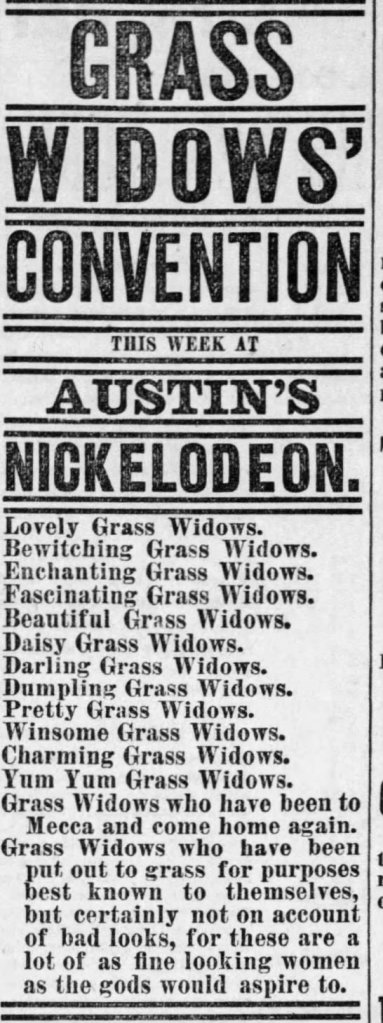
The Grass Widow Scandal

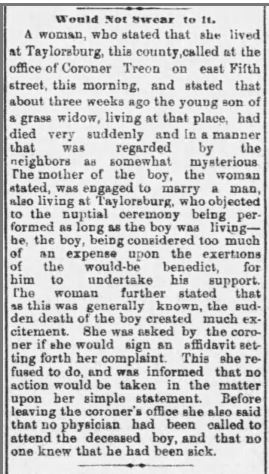
I know, I know. This is a bit of a downer story. But take a moment to read through this article, won’t you? Because I wanna talk about it.

The Dayton Herald, May 19 1885

Ok, first of all. OMG.

A horrific tale of a child possibly murdered by his own mother. But you know, this also is sensational journalism at its worst. To be honest here, this is heresay.

We are ready to believe this woman’s story, yet the only name identified is Coroner (W. P.) Treon. The informant, the accused, and even child are unnamed. I wonder if the correspondent came across this story by stopping in at the coroner’s office to ask “So hey, Bill, what’s new?”

Of course, the undercurrent of it all reflects the difficult life of an unmarried woman in 1885. The only thing we know about the anonymous informant is that she’s traveled ten miles to reach downtown Dayton from Taylorsburg, which at the time was a small community located in what is now the City of Trotwood. The township mentioned in the text below is Randolph.

History of the City of Dayton and Montgomery County, Ohio, Volume 1, Page 921, Augustus Waldo Drury. S. J. Clarke Publishing Company, 1909 – Dayton (Ohio)

We don’t know if she traveled alone, but it’s obvious she was at least uncomfortable, if not actually afraid, to connect her name to the story. She came to the coroner to request somebody of authority to check into the suspicious death of a child. And with a wave of a hand, was dismissed as a gossip monger.

And what are we to believe about the the grass widow who wanted to marry a man who had no interest in raising a child that wasn’t his. Unfortunately, we’ve heard this story in our modern times as well, haven’t we? We’ve all read too many news stories about women who make that nefarious choice.

It’s not really fair to make the assumption about our grass widow, though. Of course, an unmarried woman in 1885 would have it hard, especially with raising a child. She wouldn’t own the land she was living on, so likely had to make a living as a seamstress, laundress, or have a low paying factory job. Getting married would be a quality of life improvement, even if the guy was a straight up ratbag. But still, that’s quite a leap to say she murdered her child.

Perhaps instead, the community could have chosen to be sympathetic to a woman who lost her only child and rally around her with casseroles, good wishes, and maybe a dollar or two. But as a grass widow, respect was hard to come by.

When I first saw this story, which was shared by the Randolph Township Historical Society’s Facebook page, I was confused by the term Grass Widow. You too? I did some reading on this and found that the meaning has changed over the years, from respectful to naughty and eventually to an accepted term.

It seems the original meaning began as an English term for women whose husbands were away at length, whether at war, conducting business in another country, or have otherwise made a temporary “widow” of their wives. As the the usage became more common in the United States, the meaning began to change.

National Banner and Nashville Whig, Jan 10 1829, Page 1

Consider this article from 1829 written by a gentleman from Woodville, Mississippi who just wanted to share information on his fine community with anyone interested. This is from his letter to the editor of a Nashville newspaper.

A grass widow in 1829’s Mississippi may have shared the same connotation as the British usage. But we might have started to shift over to referring to women who are married, but are separated from their husbands with no expectations of living together again. The term is also attached to women who’ve had a child outside of marriage.

This little snippet of info from 1858 reflects when Grass Widow started to be used for a divorced woman. Apparently, Wabash, Indiana was the place to go to make this happen. A woman merely needs to board there for ten days, then can lawyer up. You may be as surprised as I was to see the term bewitching vixens in a Victorian era newspaper story. Because obviously, if you’re a single woman with experience, let’s turn it into something rather naughty.

By the way, this story was written by a Dayton reporter and was shared in newspapers across our great nation. Of course it was.

The Advocate, Buffalo, New York, Jul 8 1858, Page 3

But not so fast there, Wabash.

South Bend, Indiana, says hold my tar and feathers and watch this.

Brooklyn Evening Star, Aug 16 1859, Page 2

Speaking of lack of respect, there’s always been this. I give you 1890. And props to Boston for their use of creative adjectives. We’re just missing vixen here.

The Boston Globe, Apr 6 1890, Page 11

Not really surprising is how Congress made a mess of things when they enacted the Edmunds-Tucker Act of 1887 outlawing polygamy as practiced by the followers of the Church of Latter Day Saints. By declaring plural marriages illegal, our government created their very own version of grass widows. Splitting these Mormon families resulted in countless women pushed out from their homes. They can no longer live with their husbands, who in the meantime are having their own problems with persecution. For lack of a better idea of what to do with these surplus wives, those in political power had a large hotel built in Salt Lake City to house them together.

“Look, single ladies,” they said. “Stay here so we can keep an eye on you, ok?” With only one registrant upon opening the hotel, the building was eventually sold for other purposes. In the meantime, tales were being shared in the Midwest that if a man were desperate to find a wife, go to Salt Lake City and you can pick one out.

As we move out of the Victorian Era and into the twentieth century, we do see Grass Widow still in use and still with the watch-your-husbands mistrust of these woman with life experience.

By the time we reach the 1960’s, Grass Widow is nearly always referring to a divorced woman. And by the 80’s, the term is considered well out of date and is treated as a curiosity.

Today we given this old-fashioned term a new life as a name for a lovely purple flower, the Grass Widow (Olsynium douglasii).

I’m curious though, who was already familiar with Grass Widows? Share your story in the comments!

The Lady and her Deutsche Dogge

I once asked a friend, a professional dog handler, for some advice about training tools. She told me that it doesn’t matter how heavy the leash is, it’s all about how much control you have over your dog. A thin leather leash is all that’s needed for a well-mannered canine companion. At the time I had just taken on a young German Shepherd Dog who had the unfortunate combo of brute strength and a strong fear response to anything the world had to offer. There was never a time I felt comfortable with a thin leather leash with this fella.

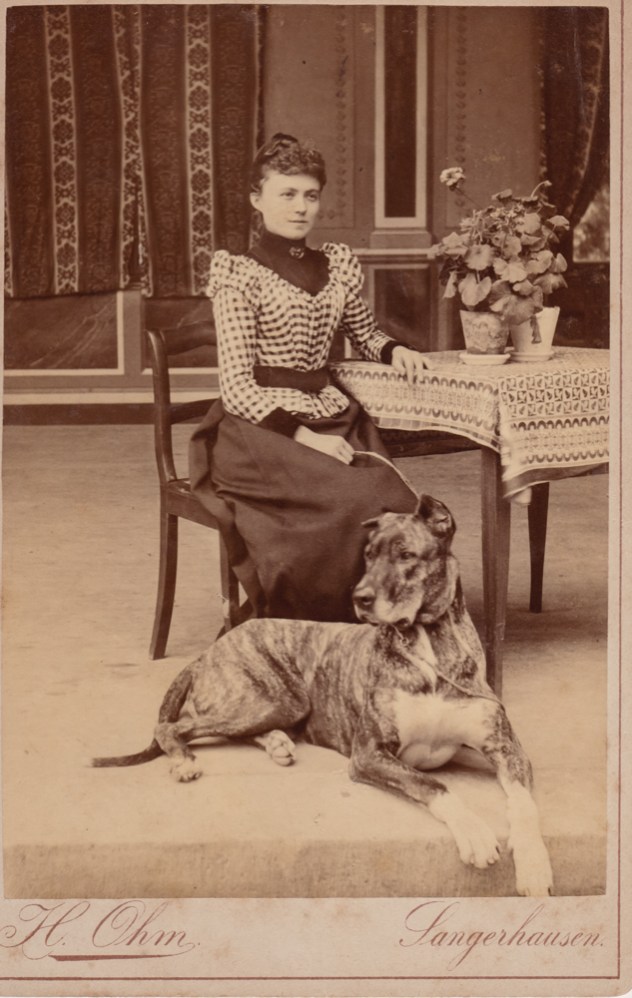
I was reminded of this conversation when reviewing this remarkable cabinet card photo.

Unknown Woman with a Great Dane. Photographer H. Ohm, Sangerhausen Germany. c.1895

Those who’ve been following our sister site at Raising a Super Dog are aware of my appreciation of All Things Dog. I am absolutely fascinated by all facets of the canine-human bond.

So besides taking the talk for a walk, so to speak, by raising service dogs and volunteering as a pet therapy team, I collect stories to share how dogs change our lives in positive and profound ways.

Awhile back, I created a Dogs of Yore Pinterest board as a jump start to capturing the long history of people enjoying life with their four-legged companions. In a time when a photo-op was a planned event, and not just “IDK, feeling cute. Might delete later,” these were folk who wanted to showcase their relationship with their canine partner.

Since starting the digital image collection on Pinterest, I began looking for original images as well. And so I welcome my newest acquisition of this cabinet card of a lovely young German lady, who shares a vague resemblance to Sigourney Weaver, and her brindle Deutsche Dogge, a breed we now know as the Great Dane. And one really, really thin leash.

Based on the type of cabinet card and the young lady’s attire, I’m taking a swag this is just about 1895. Let’s take a closer look at the details for any other possible clues.

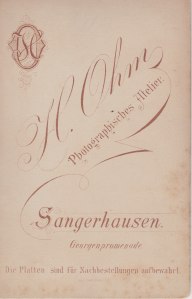
The reverse side of the cabinet card has the standard stuff with the name and address of the studio, along with how they are able to make more prints upon request. In this case, the photographer uses the term “die platten,” which indicates they were likely using a dry glass plate process.

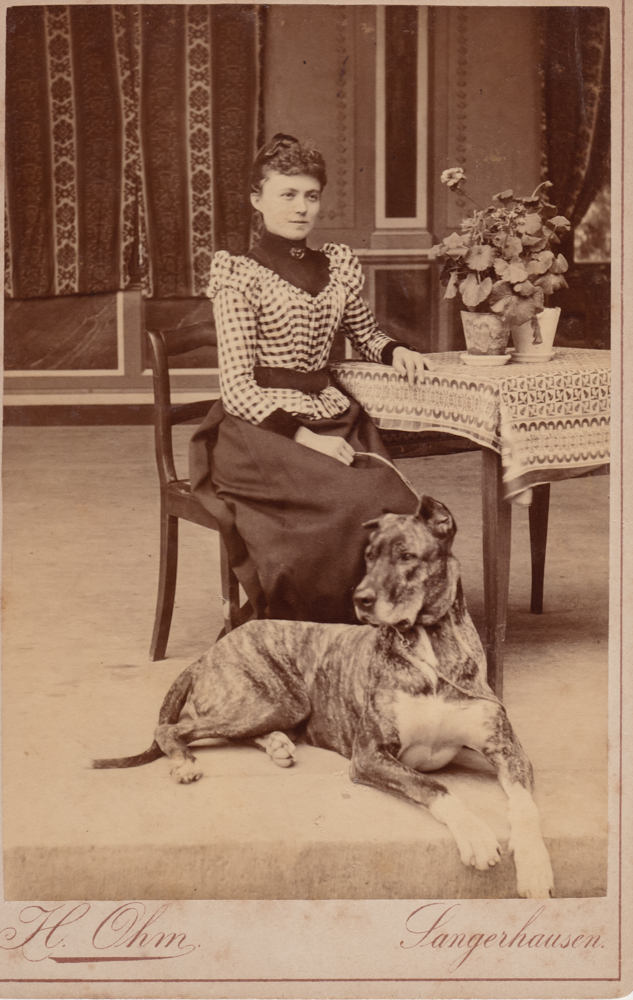
A close-up of the young lady shows more details of her dress, which appears to be a dark velvet beneath the puff-shouldered frock; a decorative pin at her throat is the only jewelry she is wearing. Her gaze is one of confidence and is only matched by her dog’s expression.

What scares this woman? I’m guessing not much.

Ich esse Drachen zum Frรผhstรผck

The Deutsche Dogge, or Great Dane, was popular in the early 1800’s in Germany as boar hounds. This explains the closely cropped ears on our handsome friend here, which was still the style at the time of this photo. However, this guy was most likely a beloved pet of a family with modest wealth, not a hunter.

And that beautiful head shape shows a bit of the Mastiff background bred into these dogs. But hey, what about that one-ear-up and one-ear-down thing he has going on there? It takes some of his street cred away, doesn’t it?

Speaking of street cred, let’s take a moment to respect the leash loosely held in the young lady’s hand. Consider that she left her home holding that thin phone cord of a thing, strolled the streets to reach the Mr. H. Olm’s studio at the Georgenpromenade, entered a building with strange men with beards and hats, then she posed with a dog so massive they had to move the camera equipment back to get the whole dog in the shot. You did notice the front paws hanging off the edge, right?

“Could you move your dog back a bit, please, Miss? Nein? Uh, ok, then.”

As always with these things, I wish I could know more about this photo. What was her name, did she grow up with this breed of dog, if the geraniums on the table indicate it was summer, wasn’t it too hot to wear velvet?

And the dog’s name? It must have been something heroic, right? I’m guessing he might be a Kรคtzchen, Tรถrtchen, or something befitting.

But I could be wrong. Maybe it’s closer to 1900.

Benjamin and the Night the Stars Fell

Chances are, if you look up at a clear night sky from your backyard tonight, you’ll see the twinkle of merely a few stars. And I’ll remind you of a weirdly uncomfortable fact … you might notice that some of those are actually satellites. Depending on where you live, the degree of light pollution from your city of choice reduces the visibility of our recognizable celestial fireballs.

I can remember seeing more of the night sky as a kid when our house was surrounded by cornfields and located just outside the skirts of our small Ohio village. During those summer nights, we could look up and identify the seven stars forming the Big Dipper in between games of firefly catch & release.

And oh, we loved that little heart skip when witnessing the rare falling star. We’d track its short blazing life until it winked into nothingness. Then close our eyes to make a wish.

Long before our own living memories, let’s think of the time when there were no city lights to dilute the stars’ presence when travelers moving through unfamiliar territory would rely on the night sky to guide them. Farmers were as dependent on the reliability of the stars as they were on the phases of the moon. It was how they knew what to plant and when; how to prepare for the harshest seasons. This knowledge was what they needed to keep their families alive. It was essential.

And we imagine, to anyone dependent on the stability of such things, any changes to the placement of the stars would cause more than a child’s heart skip.

During the autumn of 1833 something remarkable happened in the night sky. The event, later named as “The Night the Stars Fell,” became lore to be passed along family lines.

In the early predawn hours of November 13 1833, one of the greatest natural light shows occurred in North America as tens of thousands of meteors fell by the hour, appearing as if the stars themselves were turning to a silent, fiery rain.

Engraving by Adolf Vollmy (1889)

Meteors in the early 1800’s were familiar sights, but they were not well understood, even by those who studied astronomy in that period. For witnesses who held the November 13th event as something magical, their opinions may have been later swayed by others who considered it as an ill portent. This fiery rain was something that had not happened before in their modern written history, so it must have some deeper meaning. How could it not be something preternatural? A dark omen of something wicked yet to pass? Or instead, perhaps a message of hope, such as the third great sign of the Second Coming prophesied in the Holy Bible?

"Immediately after the tribulation of those days shall the sun be darkened, and the moon shall not give her light, and the stars shall fall from heaven, and the powers of the heavens shall be shaken."  Matthew 24:29
North Carolina Constitutionalist and Peoples’ Advocate, Nov 19 1833

Today we know that this was a Leonid meteor storm that occurs as a result of the earth crossing the debris stream of the Tempel-Tuttle comet, named for the two men who identified its orbital path in 1855/56. Because of the elliptical path of the Tempel-Tuttle comet, a meteor storm is predicted every 33 years when the earth crosses through a fresh stream of particles, which vaporize when they hit our atmosphere; a phenomena that NASA refers to as “bugs hitting the windshield of an automobile.” On a smaller scale, the Leonid meteor shower occurs every year in November, dependent on clear skies for the viewer.

Despite the 33 year predictions, the next notable Leonid meteor storm in North America happened in 1966. Many eye witness accounts have been archived on this event at NASA-Leonard Storm 1966.

As far I can tell, the 1999 Leonid Storm was in the meh category. I know I was busy then, still I think I would have noticed it. So here’s where we are – hold the date in your Google calendars for November 2032 and send me an invite. We’ll make a celebration out of this next one. Let’s theme it something like “Party Like it’s 1999” and we’ll all wear purple, because that will be so retro.

According to family stories, my 4th Great-Grandfather Benjamin Isaac Farmer (1784-1863) was a witness to the 1833 Falling Stars event. His grandson and namesake Benjamin James Farmer (1837-1915) made a mention in the first paragraph of his 1898 memoir.

“My grandfather moved to Indiana when my father was small boy. He found that country so sickly he moved back to Ash [sic] County. He was camped on the road the night the stars fell. I don’t remember the date.”

Benjamin James Farmer, “Memoir of Benjamin James Farmer” Arkansas State Archives, Little Rock, Arkansas, 1898.

Funny thing with memories, especially when formed around family lore. If Benjamin James says his grandfather temporarily moved the family to Indiana, who am I to say it wasn’t so, just because I can’t find any record of it. My limited research resources counts for nothing, of course. This was nearly three decades before the start of the Civil War and written records are rather scarce on the little things, like packing your family in a wagon and crossing states on a wanderlust journey.

Okay sure, but why was Benjamin Isaac camped on the road during the Falling Stars event? Is it even related to the Indiana trek? Was his family camping on the road with him? And honestly, are these two totally different thoughts Benjamin James used an opening to his memoir?

Still, I’m kinda thrilled to have found any written record of at all of the Night of the Falling Stars in my family history, no matter if it’s merely one sentence.

Benjamin Isaac Farmer, and his brother Enoch, were first generation Americans, their father having immigrated from Ireland to later settle in North Carolina. Benjamin, befitting his moniker, was indeed a farmer by trade, as most were at that time in the pre-Civil War pioneer era. He married Jane Thompson (1794-?) and they had eleven children together, which included my 3rd Great-Grandfather David Preston Farmer (1822-1902), their fourth and youngest son.

Jane Thompson Farmer’s background is more difficult to find; not unusual for women of the time. Let’s be real here, if it weren’t for the census and the birth records from childbearing, we’d be left wondering what their names were at all. I’ve been unable to find burial records for her, so I suspect her marker has been long eroded in a Farmer family cemetery in North Carolina.

But you know? I hope she was able to see the meteor storm that night in November, 1833 and it brought her mystery and joy and fireside stories to tell her many grandchildren.

And I think that Jane and the Mystery of the Falling Stars would make a good name for a young adult suspense novel.

Resources:

Daisy and the Mustard Jar

There are solid ways of identifying the time period of vintage photographs and good lawdy I wish I knew about them when I started on this genealogical journey.

It’s easy enough, though, to find plenty of websites to help with dating those images of yesteryear. The Photo Detective’s blog is full of info you didn’t even know you wanted and Ancestral Findings offers a descriptive example of the different types of photos you may have in your family’s collection. (And if you have a good resource you like, be so kind as to share this in the comment section below, won’t you?)

So you have the straight up things to review such as the type of photo, clothing design, suit buttons, and hairstyles. And then the not-so-obvious in the way of hidden clues require a closer look, sometimes even with a magnifying glass. Got it. Check.

But I want to share another step that doesn’t always show up on the usual Tips & Tricks lists. What can we find out about the photographer? Who are they and where did they set up shop? What are the years that the studio was in business? Was it a single location or did they branch out with several studios in the region?

This is part of the history we’re looking for, right? And besides, if I skipped this step, I would have never known about Daisy Marble.

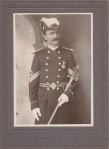
Ok, so the photo above of the handsome uniform and its mustache is one you may have seen before at House BlackSword, and a heads up that you’ll see it again later when we share how we solved the story behind that mystery image. But before that, let’s talk about this other fine fellow I’ve been creeping on. This is the photographer’s imprint on the bottom frame of the photo above.

H. Howard Littrell & Co.
314 Wayne Ave., Dayton Ohio

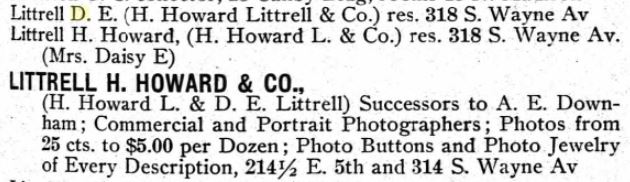
The background on Mr. H. Howard Littrell and his Co. didn’t come easy. I scanned through the Williams’ Dayton Directories between the years of 1895 and 1903, which was my estimate for the photo, and I didn’t get a hit until 1901 when this finally shows up.

Now we have some names to work with. The “and Co.” is Mr. Littrell’s wife, Daisy. Just a bit unusual to see the wife’s name included as a co-owner, but the new century was progressing. After all, just another a couple of decades to go and women can vote. The couple purchased the existing photography business from Alfred Downham and changed the name.

A little more research and we get an intriguing hit on Ms. Daisy from an incident that occurred in 1899.

Dayton Daily News, Aug 14 1899, Page 5

And this follow-up printed the next day.

Dayton Daily News, Aug 15 1899, Page 8

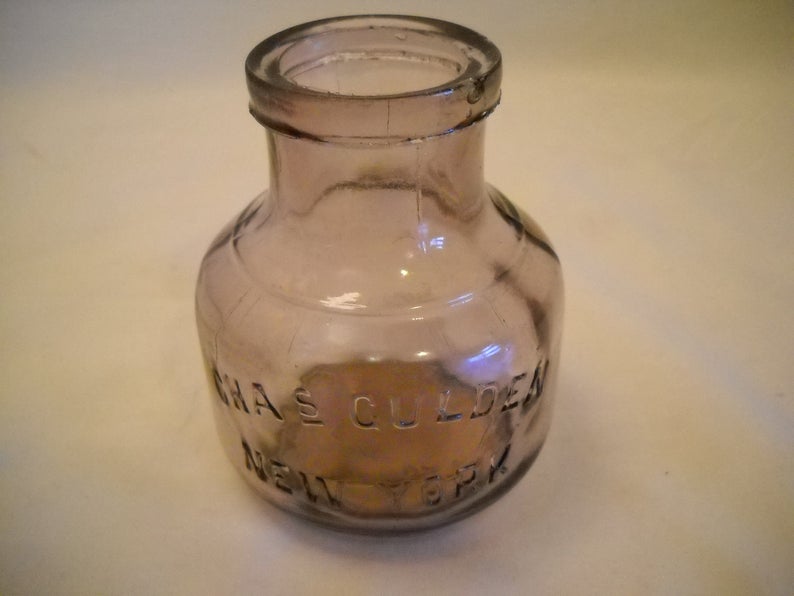
I’m not going to take you down the rabbit hole to find out what a mustard jar looked like in 1899, other than it was made of heavy glass and probably hurt like heck to be beaned with one by a “plucky little woman.” Anyhow, there is some justice in that it sounds like Mr. Smith had it coming.

Daisy Marble was twenty-four years old when she married Howard Herbert Littrell, which was just eighteen months before the mustard jar incident likely rocked the marriage boat. Daisy’s marketability in finding future employment was now tainted with an assault and battery charge hanging over her plucky little head. It’s not a stretch to imagine this as the push for the two Littrell’s to take over the photography business.

Unfortunately, this business venture only lasted two more years. In 1903 Howard was working as a bookkeeper and the two moved to a new residence on East Third Street.

And by 1909 they’ve moved again, this time for a new start in Asheville, North Carolina.

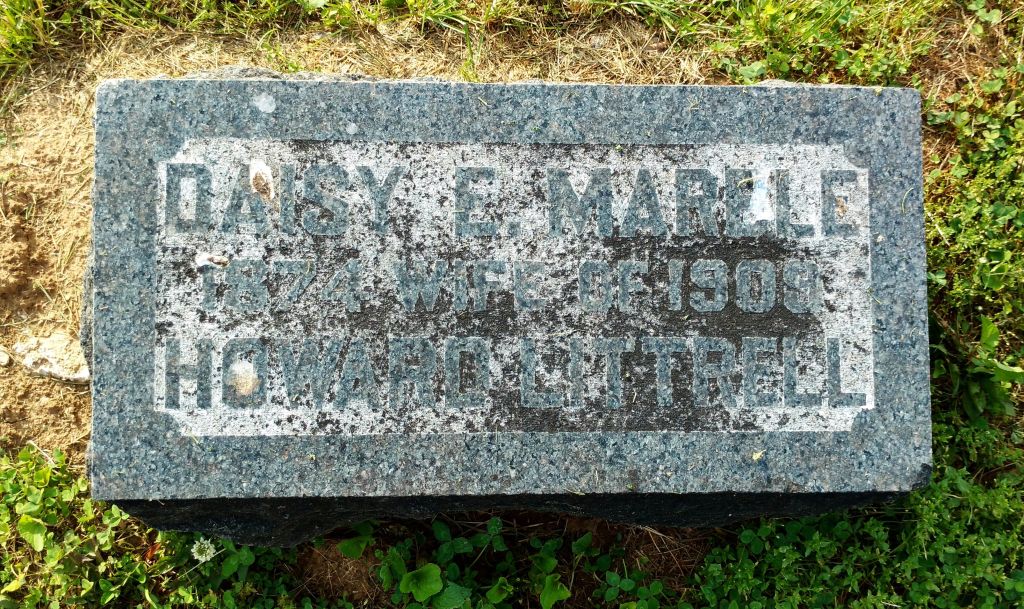
And sadly, this is where Daisy’s story ends. In 1909, Daisy dies at the too-young age of thirty-five in Asheville and her body is returned to her family in Rising Sun, Indiana, to be interred in the local cemetery. Daisy’s marker reflects her maiden name and notes her as the wife of Howard Littrell.

Howard remains in North Carolina. A year after Daisy’s early death, he marries a young schoolteacher named Harriet and they have three children together. He makes a living as an insurance salesman and later retires from that occupation. H. Howard Littrell, Sr. dies in Rocky Mount, North Carolina in 1957 at the age of 84. Harriet survives him by another thirteen years.

There’s more to the story of Daisy. There must be. I have so many questions about this passionate young woman and the way she took the challenges of life head on, so to speak.

In the absence of answers, I leave you this limerick. Which doesn’t connect to anything other than it has a Daisy in it.

A certain young man named Carlisle
Had a face that would reset a fisle.
He loved a young daisy,
But alas! she went craisy
When upon her one day he did smisle!
  - printed in The Dayton Herald, May 21 1887, Pinks of Verse, Page 6

Mystery Photo: Massillon Bicycle Repair

This cabinet card was found in our inherited collection of Sword Family photos and documents.

It’s been bugging me.

“Can I interest you in our latest model? State of the art, baby.”

As far I I’ve researched, we don’t have any connections to Massillon, Ohio. I don’t recognize these two gentlemen from any other photos in our newfound collection.

Why were these two bowler-capped fellows so important as to keep with with our family archives?

The fellow on the left with the bicycle offers a salesman’s smile of congeniality as in “what will it take to get you riding this fine machine home today?” While that tall drink of water who’s leaning in the doorway likes he owns the place is scowling – complete with a deeply furrowed brow. More bicycles can be seen in the shadows behind him.

Both are in gentlemen’s clothing; Scowl Guy’s watch fob is visible beneath his coat. They have the look of, while not qualifying as the 1% of their day, they are above the status of a physical laborer.

I did enhance the slightly damaged photo to make the text easier to read. The large sign with the lighter text says “General Repairing.” The sign below is “Novelty Works” with “Bicycles” and “Instruments” set as vertical. There may be some text below Novelty Works, but I can’t adjust the Photoshop settings to read it.

I reached out to the Massillon Historical Society for help and received this info from their archivist.

Hello Donna, I can tell you that the Volkmor photography studio was open from 1894 to 1928. He took photographs across the region and stamped almost all of his work, just like this photograph.
Based on the outfits of the two men in the photo, and the bicycles, I believe this is c.1900. The sign says โ€œGeneral Repairing,โ€ which doesnโ€™t quite help us tell what business this is.

Searching through the Business and Industry Database through the Massillon Public Library, I came up with two possible businesses:

Smith Bicycle and Light Manufacturing Company, which also did bicycle repair. It was open in 1898. It was still open in 1929

There was a Novelty Repair Shop open in 1930 (possible to have been open earlier).

So we work with the clues we have.

The archivist’s estimation of circa 1900 fits with 1) cabinet card; 2) bowler hats; and 3) white rubber bicycle tires.

I spent some time looking at Massillon, Ohio newspapers. I’m making an assumption the Massillon stamp on the bottom right of the cabinet card refers to the photographer’s shop, not necessarily the location of the general repair shop in the photo. Still, it’s reasonable to assume the photo’s location to be within a day’s ride by horse and wagon.

Foster & Zinsmaster, formerly Foster & Pocock, have an impressive business in nearby Navarre, only about five miles from Massillon.

Massillon Item, 13 Jul 1898. Included in a list of Navarre businesses.

They sell and repair bicycles almost as a side gig to their carriage works. They appear to be that era’s version of a big box store.

But there’s also this guy.

Massillon Item, 22 Sep 1898

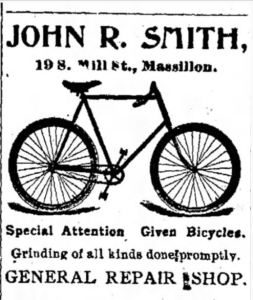
John R. Smith moved his business from 47 W. Main Street to 19 S. Mill Street sometime in 1898. He posted regularly in the classified section of the Massillon Item newspaper for the last quarter of the year reminding his client base of his new location. It kinda makes sense he would want a photo of his grand opening.

And I’m thinking this could be the business identified by the Massillon archivist: “Smith Bicycle and Light Manufacturing Company, which also did bicycle repair. It was open in 1898. It was still open in 1929.”

In the end, I don’t have a resource to confirm who these gentlemen could be. And if I consider that 200 miles separate Massillon from Dayton, I’m still stuck on what possible connection our family had with them. Travel across mid-Ohio territory in 1898 would have been some serious slow-going. You’d have to be doing that trip on purpose and for good reason. Like getting married or running from the law or something.

Still, I’m curious what you think as you look at this. Any insights? I’d honestly appreciate it.

Otto and his German Language Newspaper: Part Two

[Continued from Otto and his German Language Newspaper: Part 1]

It was time for a new plan.

Otto canvassed the German neighborhoods. Promising a quality newspaper, he collected several hundred subscriptions before even publishing the first issue. Otto partnered with Charles Schenk, an old friend from Frankfort that arrived in Dayton a couple of years earlier. They set up shop at the Christian Publishing building at Sixth & Main in downtown Dayton. And with a used printing press and German fortitude, in Ottoโ€™s words, โ€œon the first of September 1876, at five oโ€™clock in the morning, Dayton saw its first Daily German Newspaper, and it really made a favorable impression on our German neighbors.โ€ He named the newspaper the Dayton Anzeiger (โ€œAdvertiserโ€).

A. Otto Moosbrugger
(photo credit: Moosbrugger Family Archives)

Historical records show that there were actually daily German language newspapers founded before Ottoโ€™s Dayton Anzeiger, but these were disorganized attempts; all were short-lived and most not lasting even a month in publication. Still, I feel confident Otto believed his claim to be the first, as the other newspapers failed long before and were likely no longer in anyoneโ€™s recent memory.

According to Gottfried Paasche in his paper America, Germany, and the Daytoner Volkszeitung, the size of the German language press correlated roughly with the size of German immigration. German language newspapers served a transitional function for the men and women beginning a new life and generally, it was only the first-generation immigrants that read it. A newspaperโ€™s success depended on two things โ€“ how well it could keep German Americans informed and interested in German culture and how well it could inform them about life in the United States.

A typical German language newspaper of that time consisted of only four printed pages. The front page held news and advertisements. The reverse side had editorials of international, national, and local news. The third page shared characteristics with European newspapers, with poems, an installment of a novel, some articles giving background information on famous men, or descriptions of faraway places. The fourth page had more local news in the form of legal and social notices.

Dayton Volks-Zeitung Newspaper Office at 308 Fourth St., Dayton OH
L-R: Angelo Moosbrugger, George Neder, Kuno Moosbrugger, Unknown, Ed Neder, Otto Moosbrugger, Unknown
(photo credit: Moosbrugger Family Archives)

Later when the long running Daytoner Volks-Zeitung (โ€œPeopleโ€™s Newspaperโ€), changed to a daily publishing schedule, it was apparent that the Dayton German-American community couldnโ€™t support both newspapers. In 1882, Otto partnered with editor George Neder to combine the two publications. They form The German Newspaper Company with George Neder as President and Otto as Secretary/Treasurer. Two of Ottoโ€™s brothers, Angelo and Kuno, took on roles, as well as George Nederโ€™s son, Max. They moved their operations from 308 Fourth Street and headquartered at the Osceola Mill Building at 310 East Fifth Street. Today the Osceola Mills Block is the parking lot for Thai 9 and Jayโ€™s Seafood in the Oregon District.

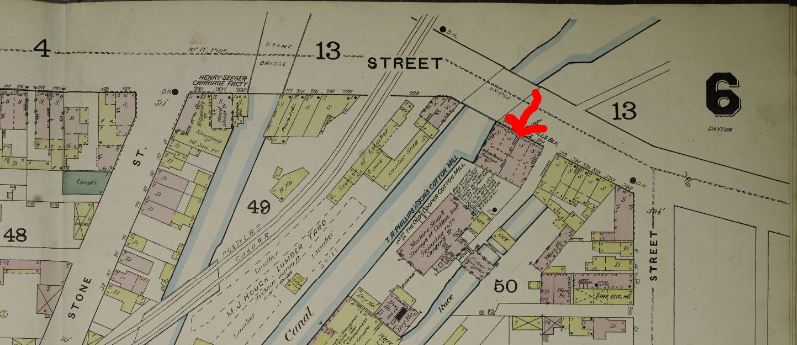
Red arrow points to 310 E. Fifth Street located in the Osceola Mills Block. This is now the east facing entrance to the Oregon District.

While Otto was working to make his name in media, he and Wilhelmina bought a cottage for two thousand dollars at 15 Buckeye Street, across the street where they were renting. It was here they raised their eight children. This home is now gone as well, with that northern side of the street replaced by US 35.

Adolph Otto Moosbrugger and Wilhelmina Fรถhrenbach are my husbandโ€™s great grandparents on his maternal side. Weโ€™re honored that they are part of our history and we can share their story.

And we think that โ€œSmoky Love in the Mahlberg Cigar Factoryโ€ would make a great romance novel.    

Sources:

  • Moosbrugger, Adoph Otto. Personal Life History of Adoph Otto Moosbrugger. Handwritten Journal, 1909
  • Orear, Linn. Survey of the Germans of Dayton 1830 โ€“ 1900; their cultural and economic role. Thesis. Miami University, 1961
  • Paasche, Gottfried. America, Germany, and the Daytoner Volkszeitung 1880-1900. Thesis. Miami University, 1961
  • Rattermann, H. A., and Elfe Vallaster-Dona. German Pioneers of Montgomery County, Ohio: Early Pioneer Life in Dayton, Miamisburg, Germantown. Published for Clearfield Company by Genealogical Publishing Company, 2014
  • Tolzmann, Don Heinrich, et al. German Immigration to America: the First Wave. Heritage Books, 2007
  • Wittke, Carl Frederick. The German-Language Press in America. Literary Licensing, 2000

Otto and his German Language Newspaper: Part One

The City of Dayton, Ohio in 1867 was at the edge of the second industrial revolution and maturing from her agricultural beginnings. Factories were competing for prime real estate along the new railroad lines to transport their goods faster and cheaper than ever before. And as one of the largest Ohio cities, immigrants arrived by the hundreds in search of employment and with romantic hopes of achieving the American Dream theyโ€™ve heard so much about.

Meanwhile in Ludwigsburg, Germany, Adolph Otto Moosbrugger was struggling to rise above the poverty of his youth. The first-born son of a country doctor and a French refugee, Otto referred to his early childhood as โ€œhappy and gay, although always hungry.โ€ His earliest memories were of scarcity and rationed food. He later tells of respect for his mother, Josephine, in how she would split a small loaf of bread among six hungry mouths without giving a preference to any one person.

In 1860 Otto turned 21 and joined the military when the Kingdom of Austria, an ally of Germany at the time, went to war against Italy. After the war, he left the military as rank promotions were slow during peacetime and he then moved through several clerical jobs, but never making much money. It was when working as a bookkeeper at a cigar factory in Mahlberg that his life began to take focus. Otto began courting 18-year-old Wilhelmina Fรถhrenbach, who also worked at the factory. Surrounded by the aromatics of tobacco and sweat, the two fell in love. They wanted to marry, but Otto knew his clerical career wouldnโ€™t provide the income need to start a family.

A good friend of Ottoโ€™s, Gustas Dreher, was a brewer in Mahlberg and had spent several years in the United States. He would tell Otto glorious stories about this Promised Land, โ€œportraying it in the rosiest hues.โ€ With a plan in mind, a 28-year-old Otto bought passage on the steamer, โ€œNew York,โ€ and made a promise to send for Wilhelmina when as soon as he could.

Twelve days after leaving Germany behind, the ship arrived at Ellis Island on a cool fall day to deliver her passengers to this new world. With his next step fully decided, Otto continued his travels to the renowned city of industry, Dayton, Ohio.

Otto Moosbrugger on New York’s passenger list. Mistakenly transcribed as “Maasburger.”

Otto was bilingual, being fluent in German and French. However, he couldnโ€™t speak a word of English. He was challenged by this language barrier, especially when trying to find work. He began with labor jobs, such as painting railroad cars for the Barney & Smith Company. He enjoyed the physical work, which he felt held more respect than clerking. But he was frustrated in the low wages that kept him from his goal of bringing Wilhelmina from Germany.  In Ottoโ€™s words, he was โ€œunable to earn even the salt for his soup.โ€

As the labor force grew in Dayton, so did the trade union movement. Many unions had a strong discrimination against immigrants, making higher paying labor jobs outside of their reach. Otto eventually found a better paying job with a German-owned music store as a clerk. After two years, he finally had enough money to send for Wilhelmina. They married in 1869, and moved into the second story of a home at 24 Buckeye Street that was owned by an elderly couple, the Wiedmanโ€™s, who lived on the first floor with their adult son.

The German American population in Dayton during this time was nearing its peak. According to Linn Orearโ€™s Survey of the Germans of Dayton 1830 โ€“ 1900; their cultural and economic role, by the year 1890, eleven percent of the cityโ€™s citizens were of German heritage, with many other Germans living in the surrounding areas. By 1900, the German-born living in Dayton far outnumbered natives in the occupations of bakers, butchers, and brewers.

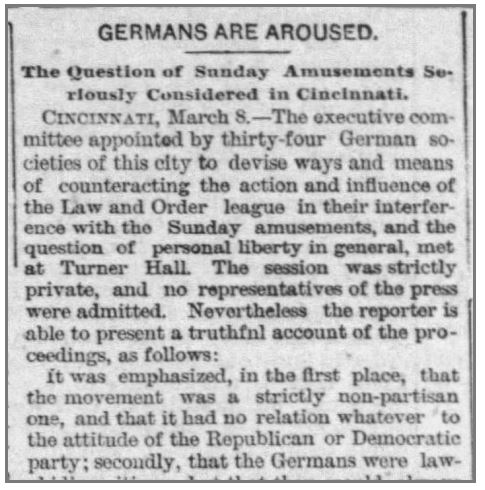
Because of this large immigrant population growth, nativism supporters were very active in cities across the United States. Nativism was supported by followers of the โ€œKnow Nothing Party,โ€ who were political activists rebelling against those who were bringing foreign ideas into the communities. The Know Nothings were against the Irish for practicing Catholicism and they didnโ€™t like the Germans, accusing them of cultural isolation, and their implied superiority and aloofness. Nativism methods ranged from petitions and legislation, but eventually escalated to violence. City riots in large cities were common, sometimes triggered by something like when the German community insisted on celebrating Sunday with parades, picnics, and songfests, when the Know Nothings felt Sundays were to be treated as a solemn day of peace and rest.

The Dayton Herald, March 8 1886

Otto was engaged with the political activities in Dayton and was compelled to protect the German community he lived in. By 1875 he had reached a self-taught fluency in the English language. He took a job as a treasurer with a tri-weekly German language newspaper, intending to support the German American citizens in that role. The paper was so poorly managed by its editors, however, that many times they couldnโ€™t even make payroll.

It was time for a new plan.

[continued at Otto and his German Language Newspaper: Part Two]

Sources:

  • Moosbrugger, Adoph Otto. Personal Life History of Adoph Otto Moosbrugger. Handwritten Journal, 1909
  • Orear, Linn. Survey of the Germans of Dayton 1830 โ€“ 1900; their cultural and economic role. Thesis. Miami University, 1961
  • Paasche, Gottfried. America, Germany, and the Daytoner Volkszeitung 1880-1900. Thesis. Miami University, 1961
  • Rattermann, H. A., and Elfe Vallaster-Dona. German Pioneers of Montgomery County, Ohio: Early Pioneer Life in Dayton, Miamisburg, Germantown. Published for Clearfield Company by Genealogical Publishing Company, 2014
  • Tolzmann, Don Heinrich, et al. German Immigration to America: the First Wave. Heritage Books, 2007
  • Wittke, Carl Frederick. The German-Language Press in America. Literary Licensing, 2000

I mustache you a question

This is a blog post from our sister site, Raising a Super Dog. I originally shared this story when I was still fresh in the beginning of our family research.

Since I’ve found myself in the position of Keeper of the Family Photos these last couple of weeks, the immersion into family history has completely hijacked my daily routines. What I call “going down the rabbit hole again” while doing genealogy research, my husband refers to as “have you even showered today?” Right. About that.

Don’t ask.

See, for every photo that I can actually link to a name, there are so many more faces – some bearing a no-nonsense grim expression, others beaming in black and white glory – I just can’t seem to identify. I carefully pluck an intriguing image from its four photo corners, where it’s been safely secured for the last, oh, hundred years or so, and turn the thing over to find … nothing.

And this is where I silently scream in frustration.

Just kidding. It’s more of a throaty, aargh-ish grunt; like the sound I make when I try to stand up from a too-soft sofa. With the contrary ancestral photo in hand, I hold it at arm’s length and cry out “who ARE you people?”

They never answer.

rcu knight of st. john cabinet card=-sword family
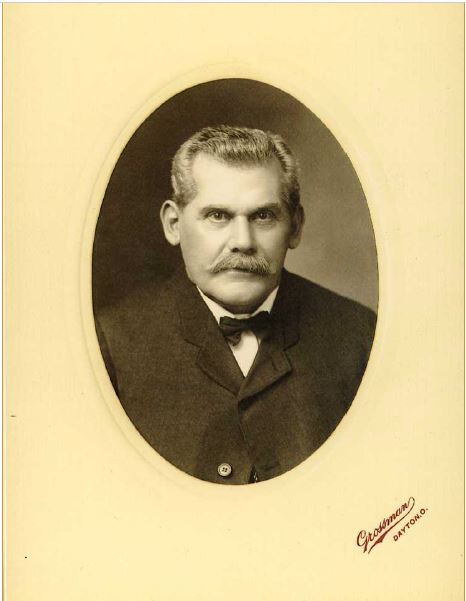
What impresses me most about this gent … is it the uniform? The intense gaze? Let’s be honest here. It’s that wondrous cookie catcher.

Oh, and did I mention? This isn’t even my family, really. It’s my husband’s paternal side.

With that, let’s all pause here to write ourselves a reminder note to label your historical family photos. All of them. Before it’s too late, people. I’ll grab a cup of coffee while you do this.

Ok, y’all. I’m back. You know, your descendants will thank me later. Because what I have before me now are more than fifty photo albums and scrapbooks, plus another four storage boxes of loose photos and documents. And no one left in the family with a living memory of most of this collection of images.

So many magnificent mustaches, so few clues.

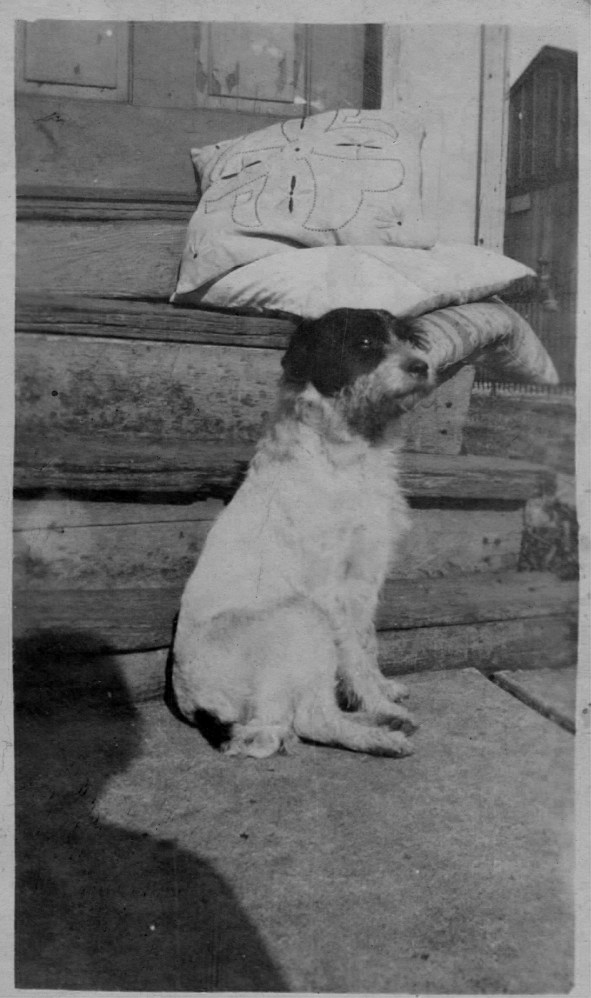
Speaking of furry facial features, this portrait of an adorable bearded dog has been gracing our walls since being gifted to us a few years ago after my husband’s uncle had passed. Before reaching us, this fella was in a place of honor in Uncle Jay’s study, right alongside the newlywed portraits of Jay’s mother and father, who married in 1911.

1917 Portrait of a Sword Dog
Right. So where’s *my* portrait?

When we first received the portrait, I had a deep curiosity about the dog. Jay’s love of this companion was strong enough to have the dog’s image framed and on proud display. Yet today we have no historical context for it. Name, gender, when the dog was around to do his (or her) part in the human:animal bonding experience … nothing to offer us, but the solemn over-the-shoulder hundred yard stare and the knowledge this photo was taken decades ago. Or perhaps even a full century ago.

So maybe you can imagine the wonderful dopamine response when going through one of the newly acquired Sword Family turn-of-the-century scrapbooks and I find this treasure trove of vintage images.

Vintage Sword Dogs
Vintage Sword Dogs

Six glorious pages of nuthin’ but dogs and cats and chickens and ducks, all in the general era of 1911-20. What kind of person scrapbooks this stuff? My people, that’s who.

Then this.

Portrait Dog 1917
What is this “Photoshop” you speak of?

Do you see it? It’s the same photo as in the oval frame. Except that it’s been altered to remove the background. The 1917 version of Photoshop.

Really.

This photo has generously rewarded me with info on the back. Handwritten there is my husband’s grandfather’s name and address – and instructions to the photo processor to create a block background.

Huh.

Oh sure. But you know what’s not recorded in that brief script? That’s right. The we-love-him-so-much-let’s-frame-him dog’s name.

There are more photos of this guy. Like this one, which is my father-in-law, George, captured in time as a toddler enjoying a bonding moment with the dog.

george and dog
This is the photo that helped me to date the portrait image and to, well, know it’s a boy dog. I’m savvy like that.

Oh, mysterious terrier of 1917 House Sword. Who are you?

Seriously, don’t be that family. Why put your heirs through the awkwardness of monikers lost to history. Label those old photos before you, too, lose the living memories of your clan.

And hey, let’s bring those magnificent mustaches back, too. How did those ever fall out of style?

And by the way, I’ll make a guess that perhaps his name was Skippy.

The dog, not the stache. Don’t make it weird.

i approve this post
I approve this post